Producing FAVA Seed

Fava Beans have an interesting
upright growth, totem pole-like. They can reach 2 feet or more in
height. There are some types that have a tendency to branch but most
don't. Their
flowers and young leaves are edible but they're favored for their
shelled green beans and dry beans. The flowers are typical legume with
the same self pollination tendency as garden peas although crossing can
occur especially if plants of different varieties are in close
proximity. Sow the seeds early before the days grow too
hot. A late April sowing worked well for us here on Long Island
with pods developing in June. Even the large seeds shelled from
green pods and boiled can have tough seed coats that must be peeled
before eating. Oh yes, there is a rare affliction called favism
which is an allergic reaction to favas. Apparently, acute renal
failure is a consequence of the reaction and a blood transfusion is
necessary for best survival rates.
Even if you're not a big fan of
the flavor (try them with a nice chianti as long as you're not
allergic), the plants are a very
effective legume cover crop in some areas of the U.S. with the ability
to fix large quantities of nitrogen. We'll try it again in the fall but
I don't expect to be able to produce a dry seed crop.
They're a good trap plant for
aphids and thrips. When you see the pests, pull the plants and destroy
them. The tips with aphids can be pinched off and destroyed without
affecting the harvest in most cases.
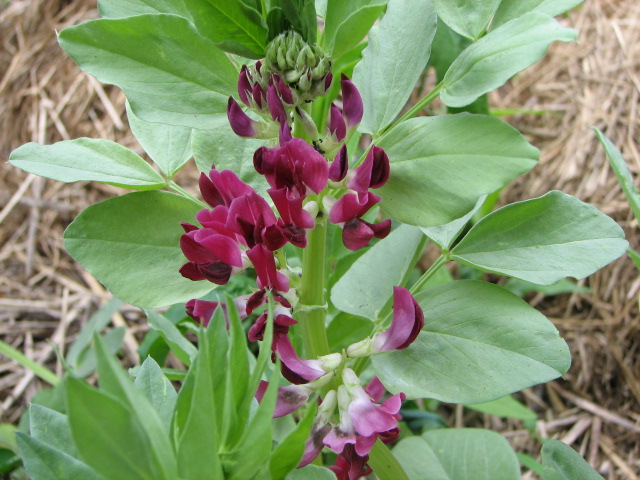
Pods of some
varieties hang down from the stalk, others produce upright pods like
the small seeded Eqyptian Fava. This is an unusual purple
flowering variety.
I've been puzzled
by the lack of commercially available fava bean cultivars in the U.S.
In Europe there are dozens of varieties available. This year we grew
several types with limited success because of the early hot weather and
persistant lack of rainfall. Fava is a good cool season crop suited to
winter culture in the south or southwest and spring culture in the
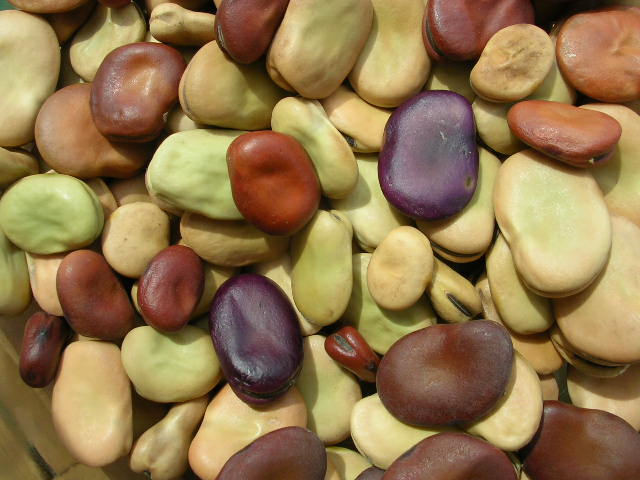
Pacific Northwest. The beautiful purple seeded Guatemalan Purple is
available from Native Seed Search, Tucson, AZ 85705.
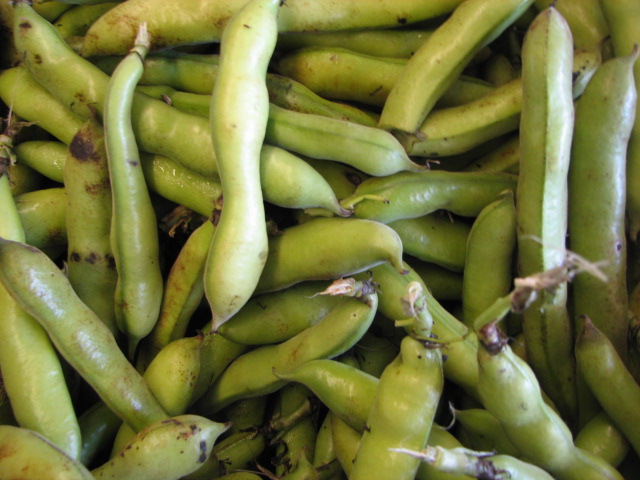
(Above- A mess of
Windsor Favas waiting to be shelled for dinner.)
To save seed wait
until the pods thoroughly dry on the stalks, be careful harvesting the
dry seed since the pods do have a tendency to shatter easily. So far,
growing favas on Long Island has not been the most productive
experience and yet we managed to get a small seed crop from the dozen
or so varieties that we trialed this year. I haven't even bothered to
label the varieties separately because of the very small seed yield.
Early next spring I'll plant this year's seed harvest in a block and
see what happens. After all, they are the survivors of a brutal trial
here and therefore are bound to be more adapted to this region.