Five colour Silverbeet (Chard)
In the 1970's I was lucky enough to be able to order directly from Thompson and Morgan in England (before the U.S. retail address was available). They offered a very comprehensive selection of flower and vegetable seed varieties that were rarely seen in the U.S. (they still do). One mixture that caught my eye was a blend of chards with stems of yellow, orange, pink, salmon and red. I had grown the white ribbed, dark green crumpled leaf Fordhook, the light green or yellowish Lucullus and a variety called, Rhubarb Chard.
Since chard often overwinters and keeps their impressive leafy tops into the winter here on coastal Long Island, the Rhubarb Chard with their deep red stems especially is a delight to see in the garden when everything else is drab. The "greens", of course, can be harvested when very little else is available. T&M's Five Colour Silverbeet looked very impressive. It would be a great eye-catching addition to the garden and so I ordered a packet. I doubt if Thompson and Morgan developed the variety- they are primarily a retailer like most seed companies that sell to gardeners. But their sources are often British and you find many of the same British bred varieties also retailed by New Zealand and Australian seed companies. Five Colour Silverbeet became especially popular "down under" in parts of the British Commonwealth and after being dropped by Thompson and Morgan, continued to be available into the 1980's in New Zealand and Australia. I had successfully been wintering over and producing chard seed crops from the original five colour and later, purchased seed from a company called "Diggers". Long Island Seed marketed a "Genetically Diverse Chard Blend" from 1980 till 1994 and it always gave us pleasure to include the genetics of the "Five Colour Chards" in our mixtures.

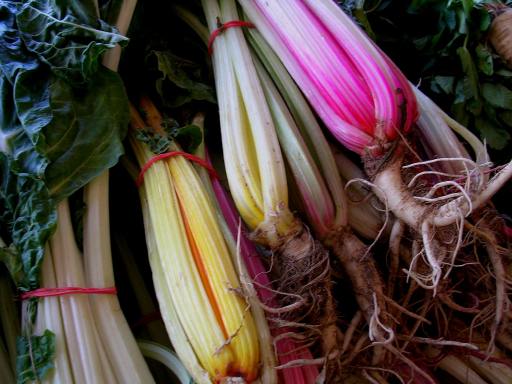
The most vigorous of the "Five Colour Chards" was the hot pink selection above and a terrific orange stem variety. As I recall, we always had enough "hot pink" to add to our mixtures! The above is a scan from a kodachrome slide stamped 1981.
If you're interested in maintaining a color from Rainbow Chard (available through Seed Savers Exchange) or Bright Lights (available through Johnny's and many retail sources) you'll want to isolate the color from other chards since they will cross with ease. The minute flowers produce a light wind blown pollen which, like corn pollen, can be dispersed over long distances. If you save chard- save only one unless you have the ability to isolate varieties or want to cross breed the chard colors or varieties you have. Oh yes, more important, if you are producing a beet seed crop and a chard seed crop in the same year, they could cross. Most likely, you may end up producing a worthless crop of beets from seeds unintentionally crossed with chard. Chard roots are not of value from a culinary perspective and will cause a significant decline in the quality of your beets.
I'm aware that separate colors of chard are now being patented. The shame of it! There are subtle variations in stem colors and leaf variations of Rainbow and Bright Lights and even in different production years because of a certain amount of crossing and selecting (intentional and otherwise). Kind of like the subtleties between Rhubarb Chard, Burpees Rhubarb Chard, Vulcan and Ruby Red Chard. One might claim one is better than the other but they are all red chards. Is one significantly better or different that it warrants patenting and how will a small producer of seed know that their not breaking infringing on a patent by selling the same color! Most of same colors in all chard (except greens) have a fairly recent parent in common.
But, all of a sudden mini greens have become big business and the Rainbow chards are showing up in high priced mescluns. My advice is, if you use large quantities of a particular rainbow chard- grow your own seed crop. It is only if you sell patented seed that you risk fines.
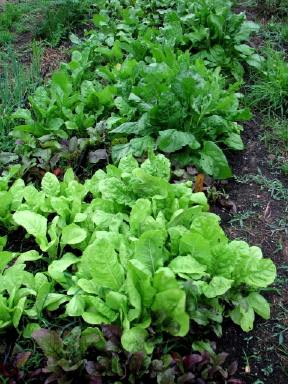
I thought I would take a break from raising "Rainbow Chards" this year and investigate the leaf chards or "perpetual spinach" from Europe and Japan. The stems are much thinner than your normal "Swiss Chard" and it's the leafy mass resembles spinach greens more than anything else. I found that there was limited variation in the perpetual spinach cultivars from various sources. Basically, there is a dark green leaf strain and a light green leaf strain. The light leaf strain (toward the front in the above photo) has less of that oxalic acid taste. I think it's the "iron flavor" that some people don't like about chard greens and the light green leaf type has less of it. Called, Bionda da Taglio, it can be purchased from: Seeds from Italy, PO Box 149, Winchester, MA 01890. It's nice because like all the perpetual spinach type chards it can be cut over and over through the season (which is from a few weeks after sowing the seed in early spring to the first snows in early winter). Just don't damage the central meristem that produces the new leaves.
Beets (or in Europe, Beetroot)
I don't enjoy eating beets. I will eat them pickled but otherwise I just don't enjoy the flavor. So why do I spend so much time breeding beets?
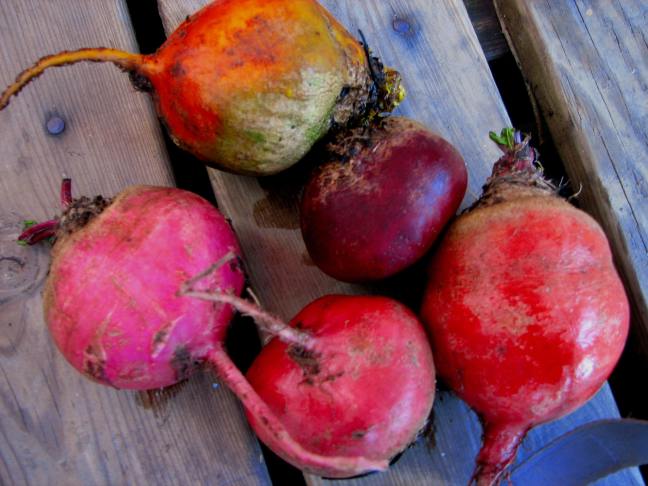
Beets are beautiful. Like the multicolor stems of chards, beet roots can be found in a range of colors from snow white to near black with pinks, yellows, oranges and purples in between. I like the diversity of beets but not on MY plate. We have been crossing a number of beets, including cultivars from USDA that were collected in the Middle East in the 1940's. Our objective is to develop a blend with a nice range of colors, good shape and good sugar content. I'll leave it to others to give me the thumbs up on flavor as I bring my new creations to the table.
Developing Beet varieties went in several different directions, those for the nutrient-rich greens or tops (silverbeet or chard), those for the roots that could be stored in root cellars or pickled for sustenance in more difficult times, the huge mangel beets for livestock and then selection for the extraction of sugars. What a vegetable!
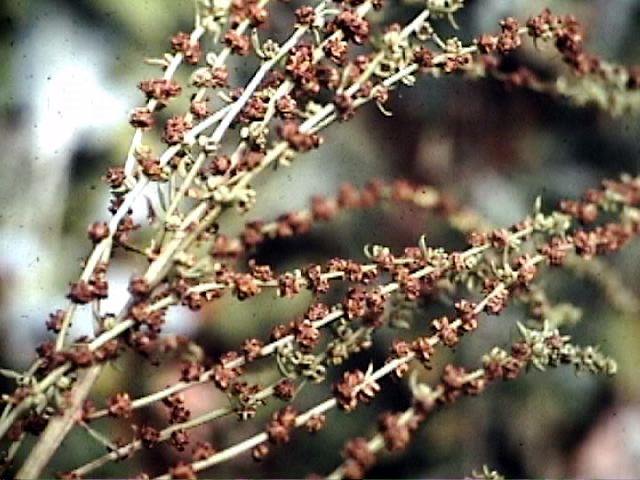
(Above- Fruit of the Beet (or Chard)
Saving seeds of Beets or Chard is less common among gardeners because it's a two year project. Only after a period of chilling and dormancy will the seed stalk appear since they are biennials. In harsh winter climates they have to be dug and stored just above freezing under high humidity conditions (root cellared). Some of our winters are mild enough here that we leave the roots in the ground and cover the tops with a deep mulch before the ground freezes. In the spring we'll see what we have by digging and selecting out the best plants. They will be replanted several feet apart since the second year they may become formidable plants that have to be staked to support the masses of seeds produced. It is easy to produce several pounds of seed from a short row of overwintered beet or chard. We will isolate different kinds (unless we are planning to have them hybridize) in poly tunnels or in different gardens separated by buildings or hedgerows.
When the corky seed balls become dry and brown the stems are cut and brought out of the weather to dry some more. Roll the brown fruits off the stems with your fingers if you're producing small amounts of seed. Each fruit contains a few seeds and if they all germinate after planting, will require thinning.
Radishes
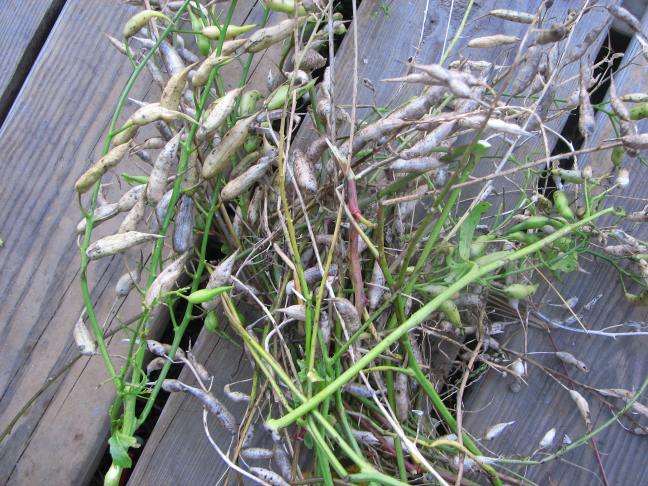
The radish pods turn brown when they are ready to be harvested and will stay on stem until neighboring pods also ripen. No need to worry about seed shattering since the pods are seamless or indehiscent. Rub them between the palms of your hands to release the seeds into a large container below and winnow out the lighter pieces of stem or pod that is introduced along with the seed. It seems to take forever to get a good quantity of seed which is why radish seed crops cover acres of field and are mechanically harvested and processed. With your one row of radishes though, you can produce better seed though. You'll want select seed from only the best quality roots (I usually pull the roots midseason and select the best to replant for seed). And you also want to select for roots that stay in good shape for a longer period of time instead of bolting.
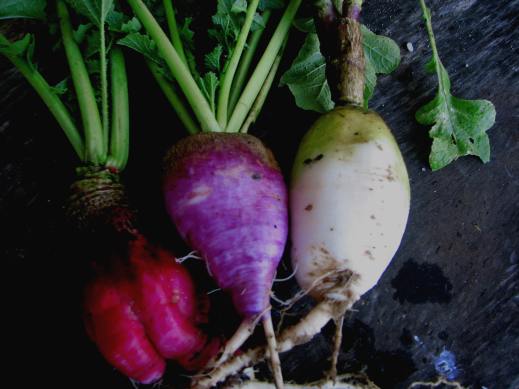
These are roots that didn't make the grade because of misshapen roots or early bolting. Only the better quality siblings were planted for a seed crop. These German "Beer" Radishes mature in about 50 days. Some radishes, like these have to winter over to produce seed. Store over the winter like beets in a high humidity cold environment or in mild areas mulch these well over the winter.
|