Alliums (Onion=Allium cepa, Leek= Allium ampeloprasum, Bunching Scallion= Allium fistulosum, Chives= Allium schoenoprasum |
Raising a Leek Seed Crop
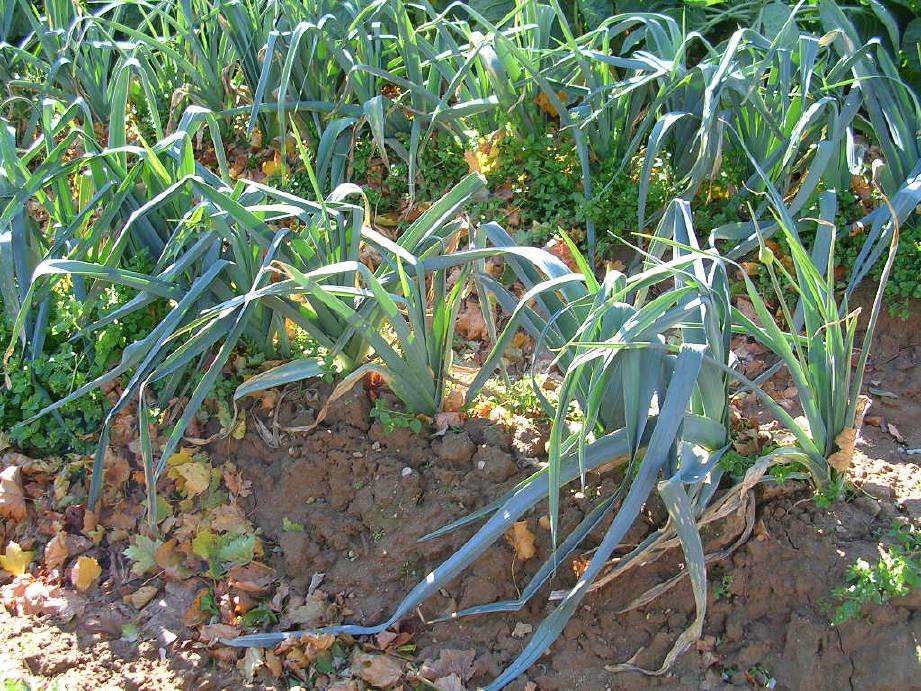
A row of leeks nicely tended and hilled to blanche those beautiful thick stems really pay off big in the fall and winter when those frosty days call for a bowl of hearty potato leek soup. Leeks find their way into many of the winter dishes I prepare. Often I'll use them like a mild onion as a flavoring or when I am doing a stir-fry or tossing a massive stem into the roasting pan to make a great gravy.

For a seed crop the leek plants have to winter over which can be done in the field for the hardier winter leeks. The summer leeks are too tender to survive the lowest temperatures, which can dip down to 10 degrees F. in early to mid January or even below 0. The trouble is determining the hardiness of the leeks you grow. A safe way to overwinter leeks is to dig them out of the ground and store the entire plant in a cold environment above freezing and humid enough not to completely dry their roots out. A potato storage area or root cellar would be a safe bet. For a few roots, wash the leeks, trim the tops as if preparing to sell them at market and put a bunch in the vegetable area of your refrigerator until spring.
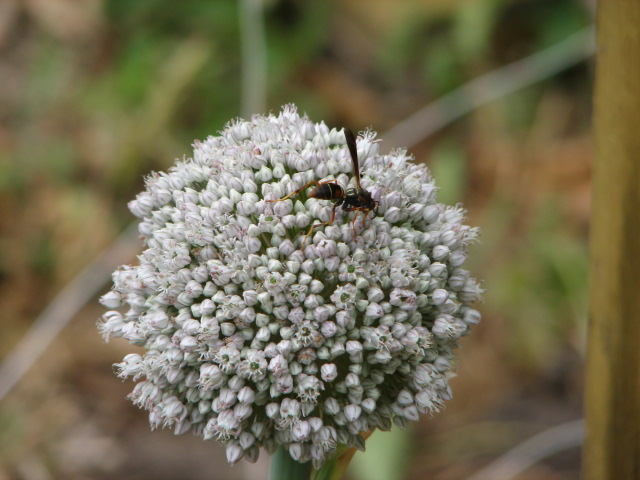
They eventually will send up a flower stalk and produce a spherical unbel that will bloom in mid summer. The stalks tend to flop down so you may want to stake them to keep them upright.
Insects will pollinate the flowers and leeks will cross-pollinate with other leeks. Onions are in the same family but are not the same species and do not cross with leeks. The same is true of chives and some kinds of scallions which may or may not cross with bulb onions. To raise a pure seed crop, plant only one variety of leek or isolate you leek patches as much as possible to prevent the exchange of pollen between different varieties. Planting different varieties of the same species 50 or 100 feet apart will limit crossing but it won't eliminate it.
We are always trying to foil the long range pollination by insects since we don't have the ability to separate by long distances. Delaying the flowering of one variety so that it flowers only after the other finishes in one option (plant one earlier or later). Planting in blocks instead of rows and then selecting seeds from the interior of the block helps. Planting two varieties with barriers between the members of the same species; plant one variety on the east side of the house. the other on the west side. The barrier can be netting with climbing beans, a corn patch, etc. Make it a challenge for pollinators to find the other variety. Bees can roam long distances but they are efficient creatures and would rather harvest pollen and nectar from all the flowers of a certain type in the same patch.
There has been much said about the viability of allium seed, leeks, onions, scallions, chives, etc. Unlike many kinds of vegetable seeds, their germination decreases substantially after the first year. You can keep the seeds for two or three years provided that you maintain a cool, dry storage area for the seed. Don't subject seeds to dampness and extremes in temperature especially high temperatures. Many seeds including leek and onion seed store very well once the seed is dried for storage and then placed in storage under the cold conditions of the refrigerator (40°F). Place several packets of different kinds of seed in a jar on a day when humidity levels are low, seal with the lid and just put it in the fridge.
FLAME WEEDING AT FLANDERS BAY FARM
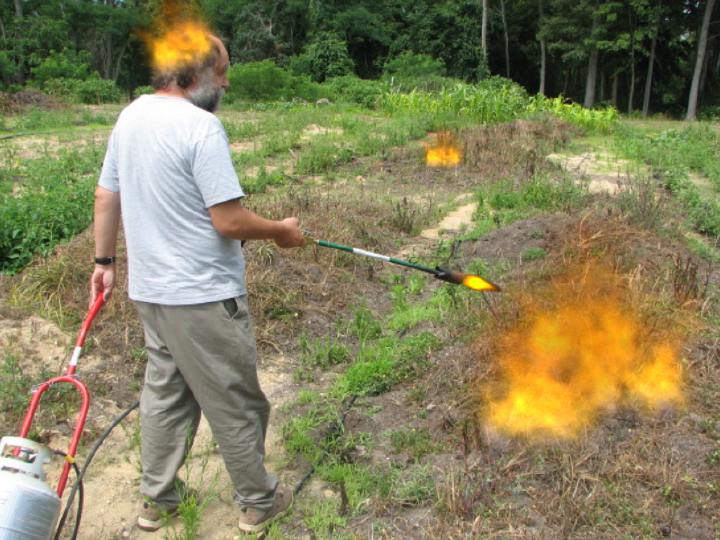
(A dramatization of the use of the "Red Dragon" on "weedy" compost.)
The organic compost that we are using this year is a beautiful rich black mulch but unfortunately proved to be full of weed seeds. Wherever we spread it, the weeds follow. I decided to not till the back field this year for a number of reasons so as an alternative, I ordered the "Red Dragon" flame weeder. It's a low cost small flamer which we ordered with a nice hand regulator that makes the unit safer and easier to control than it would otherwise be. When I went to our local Agway to purchase a propane cylinder, I made the mistake of bringing my Red Dragon into the store. "I need the propane for this", I proudly explained. "We can't sell a tank to you for THAT", the girl behind the counter said, "we have a liability issue with flame weeders and can't be responsible to what might happen". I was caught off guard. "You mean you don't have a liability problem with all those chemical herbicides?", I pointed to the aisle along side us stretching to the back of the store. The conversation went back and forth in a similar manner and I decided to leave without a propane tank.
I do enjoy my "Red Dragon". I find that it wilts the weeds with very little effort and fuel and within days they dry to a crisp. I've learned to manage the flame to weed in between my tomatoes and corn. My son who altered the above photo to impress on me why I shouldn't be so glib using my weeder always envisions the worse, "don't use the "Red Dragon" until I get home" he yells to me. And then he follows me around with a fire extinguisher. Maybe I'll upgrade to the "Red Dragon 5000" next year, then I'll be doing some serious weeding.
Onion Seed Production
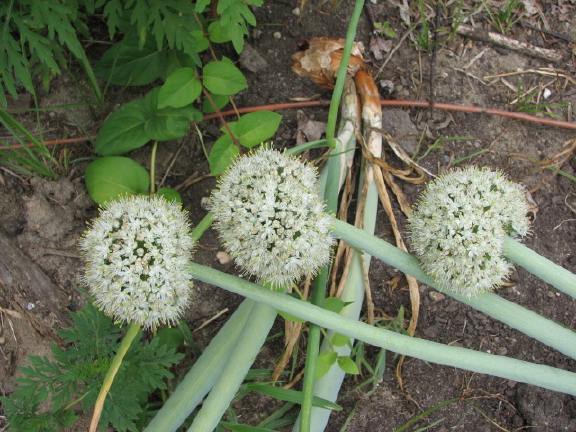
Being a biennial, onions must go through a dormant storage phase before they flower and produce seed. It takes two years. With leeks, they are best overwintered in cold storage and kept green. Some kinds of scallions (scallions may be simply a term for an immature onion or a different species) which do not produce a bulb should also be overwintered like leeks. Onion tops will die down in the summer and are stored over the winter as bulbs and are stored over the winter in a cool and dry area wherever your cooking onions best keep. In the spring, plant the bulbs outside. They will send up flower stalks and will flower on floppy stems in early or mid summer. When the flowers are pollinated by insects (for seed purity, grow only one variety of onion), dozens of small seeds form on the flower head. Wait until the heads begin to brown (you may begin to see the black seeds exposed), cut the stalks and hang upside down in a loose (allowing the escape of moisture) paper bag or sack. The seeds will fall into the bag for next year's crop. The seeds will fall off the head for a number of days since ripening takes place over a week or more.

The onion bulbs should cure for storage once the tops dry at the end of the first year. Replant the bulbs in the spring of the second year after frost for the seed crop which will generally be produced by August.
|