The Long Island Seed Project

2008 Catalog of Seeds
Seed List for Adventurous Gardeners and Farmer Breeders

By requesting any of the described seeds  below you are agreeing that any seeds that you receive from liseed.org are to be used for experimental purposes only.  Most of the seed we distribute or produce is derived from mass crosses, segregating F2 hybrids or are seed mixes and unstable breeding lines which are primarily of interest to the backyard seed breeder and garden experimenter who wants access to a larger gene pool.

If you recognize a problem with the germination or performance of the seed please let us know immediately. All of our seed is untreated.  Use the link to "Ordering" from the Home Page to request seed and make payment by PayPal.


Return Home

  Catalog Contents

Allium:  Onion, Scallion, Winter Leek
Amaranth:  Leaf and Grain Types
Apiaceae:  Carrots, Celery, Fennel, Parsnip
Asteraceae: Chicory, Endive and Lettuce
Asteraceae:  Artichoke, Cardoon
Brassica: Broccoli, Mustard, Turnip, Rutabaga, Radish
Brassica:  Brussels Sprouts, Cabbage, Collards, Kale
Chenopodiacea:  Beets, Spinach and Chard
Cucurbitaceae: Cucumbers and Melons
Cucurbitaceae: Summer Squash
Cucurbitaceae:  Winter Squash
Cucurbitaceae:  Pumpkins
Fabaceae:  Garden Beans, Lima Beans, Peas
Fabaceae: Fava Bean, Soy Bean, Runner Bean, Asparagus Bean
Lamiaceae: Basil
Malvaceae:  Okra
Poaceae:  Sweet Corn
Poaceae: Foliage Corn
Poaceae:  Parching Corn, Popcorn, Sorghum
Solaceacea:  Tobacco
Solanaceae:  Pepper,
Solanaceae:  Tomatoes and Eggplant
Solanaceae:  Garden Huckleberry, Tomatillo
Others Groups


Last Update:  January, 2007

Seed Listing:


Family: Alliaceae (The Onion Family)

Genus: Allium
Hardy/Half hardy biennial. Allium seed should be sown early indoors and transplanted into the garden in spring. They are slow growers initially and do not compete well with weeds. Most alliums are tolerant of a light frost. Leek and some scallions can over-winter (with protection in severe winter climates) to provide seeds the following year. Some scallions are perennial/dividing kinds and can produce multiple seed crops. While some bulbing onions can survive mild winters mulched, most should be over-wintered in a frost-free location (but cold) to be replanted in the next spring. Leeks can be root-cellared. Flowers are insect pollinated so crossing within the same allium species can be rampant without isolation.

Leek (Allium ampeloprasum)

  BLEND-Leek Blend
We searched for leeks in Europe and found many distinct cultivars. Some of these are rapid growers and just great for summer greens; others are winter hardy and are nice winter storage varieties. There are more than a dozen varieties here. Tall slender summer kinds tend to be bright green, thick winter kinds are often blue-green. Long white shanks are blanched when hilled or mulched as they grow in the field. You will find some nice variation here, older kinds and popular newer developments. (150 seeds)

  HEIRLOOM-Leek- Saint Victor
This is a traditional French leek which is very hardy and produces a nice thick base. The winter "greens" takes on a purple tinge in cold weather.  We grew this seedcrop in isolation and continue to select for deep purple foliage. One of the best and most beautiful overwintering leeks.  (100 seeds) 

Onion, Bulb Onion (Allium cepa)

  BLEND-Onion Blend
This is a mixture of bulbing onions, sweet and storage kinds, white, yellow and red colors. Small and large bulbs. These mostly are day neutral or long day kinds suited for northern latitudes (north of 40° latitude). More than a dozen cultivars from US, Australia, Japan, Great Britain, Spain and Italy. Check out the diversity to discover your best performers, dig them and then overwinter the bulbs to produce your own seeds. (200 seeds) 

Scallion, Onion Greens (Allium cepa and Allium fistulosum )

  BLEND-Scallion Mix
Mixture of green onions or scallions. Summer kinds as well as perennials that may prove very winter hardy. Some may reseed for you, some will keep dividing. Some are simply the "greens" of milder bulbing varieties. From our production and many other sources.  Not too diverse.  (200 seeds)

SELECTION-Welsh Onion: Mild and Crisp
A selection from LI Seed Project which in our taste tests were considered more pleasing than other selections of a winter hardy mass cross. (100 seeds)


Family: Amaranthaceae (The Amaranth Family)

Genus: Amaranth

Annual. Some species self sow. Establish seedbeds by lightly scattering seed in full sun in spring or plant out seedlings in early summer. Keep soil moist until the young seedlings are up and established. After that they can tolerate dry conditions. Seeds will germinate when soil temperature is 60°F. Wind and also insect pollination. Hybridization is well known but usually maintains it's integrity as a species. Likes warmth. Cut seed-heads when seeds are full and mature, lay on tarp in protected, dry area and allow to shatter. We use screens and a breezy day to remove chaff from seed.

Amaranth Spinach aka tampala, hon-toi-moi, chinese spinach (Usually A. tricolor, A. lividus, A. gangeticus, A. creuntus and hybrids)

  BLEND- Amaranth Leaf Mix
Better than pigweed (which is also an amaranth). This is a blend of vegetable amaranths some which are grown in the Orient and also tropical Africa and the Caribbean especially for the production of leaves that can be harvested and prepared like spinach (steamed and stir-fried).  You will see some variation in leaf color, greens and reds mostly and perhaps subtle flavor variations.  This group have smooth leaves and will produce succulent growth for repeated cuttings.  Select those plants that meet your criteria to save the seed of. Many species included, some quite colorful. Keep pinching back to harvest as well as maintain productive branching plants.  (400 seeds)

Amaranth Grain (A. hypochondriacus, A. cruentus, A. edulis , A. caudatus and hybrids)

  BLEND- Amaranth Grain Mix
Some of the variations you will find in this blend will allow you to select for your own particular requirements.  The principle grain crop of the Aztecs, it has outstanding nutritional qualities.  There will be white and black seeded types.  These will all produce great quantities of grain given good growing conditions.  Some gardeners will grow these as a background plant in flower beds because of the beauty of their large and sometimes colorful inflorescence.  We enjoy the ornamental value as well as the edible quality as we work with this group. Many kinds including ancient cultivars.  (150 seeds)

  CV- AMARANTH: Pink Tip White
This is a very productive and much branching white grain type that is especially good lightly popped and mixed with honey which is a traditional Mexican treat. (100 seeds).

  CV-AMARANTH- Copper
A very pretty orange amaranth which produces quantities of white grain. (100 seeds).

  BLEND- AMARANTH: Red Shades
Decorative reds and burgundys, black seed.  (100 seeds) 

BLEND- Dusky Pink Shades
Both white and black seeded kinds with rose pink flower spikes (100 seeds)


Family: Apiaceae (The Parsley Family)

Genus: Apium

Celery is a Hardy/Half hardy biennial. Sow the seed early indoors and transfer the plants out in spring. Slow growers at first, they require care. Celery enjoys rich, moist soils. They are tolerant of a light frost and can be over-wintered with protection such as mulching or earth mounding or may be root cellared. They will produce small flowers in small umbellate clusters and copious seed. An easy seed crop. Insect pollinated, all celery will cross with one another.

Celery aka stalk celery, blanching celery, self blanching celery (Apium graveolens)

BLEND- Stalk Celery Mix
A blend of stalk (petiole) celery varieties with very good quality petioles. We continue to work with this blend of modern and heirloom types from many sources to select for mild, sweet flavor, tender stalks and vigor under our cultural practices. We make this blend from about a dozen varieties that we have (mostly from Europe) including some rare kinds we raise seedcrops of here at Flanders Bay Farm.  Celery likes organic rich soils and plenty of moisture.  Check the internet for cultural practices that will help you produce a taller, blanched celery. (200 seeds)

Herb Celery aka cutting celery, leaf celery (Apium graveolens)
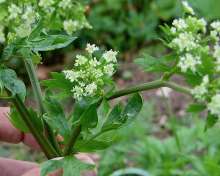
  BLEND-Herb Celery Mix
Small bushy plants of thin stalks and many leaves characterize this group used for their aromatic leaves and seed when wintered over.  Some varieties have mild, tender stalks. Flavor is variable. Easy to grow compared to stalk celery. European and asian cutting celerys are included in this mix although they are uniquely different.  (200 seeds)
 
Celeriac aka knob celery, root celery. Apium graveolens)

BLEND- Knob Celery Mix (Celeriac, Root Celery)
Good storage ability, for the root cellar. Find the best kinds for your particular growing style and environment. Needs an early start to mature roots. Produces a bulbous ugly solid root which is much enjoyed by those who have tried it. Europeans shred it raw, fry it, bake it, boil and mash it.  Very versitile. (200 seeds)


Genus: Daucus
Carrot (Daucus carota) Hardy biennial. Sow in the spring in the open ground. Tolerant of frosts. Roots can be harvested and root cellared for replanting and seed crops or left in the ground and mulched depending on climate to produce seed the next year. Insect pollinated. Easily crosses with wild carrot (D. carota) which will reduce root quality.

BLEND- Orange Carrot Standards
World's best carrots, orange color, some variety of shapes, variable adaption to soil types and climate fresh eating, summer and fall harvest, some winter storage kinds. Many different strains of Danvers, Nantes, Chantenay, Kuroda, Oxheart and more.  Select your best roots to over-winter and plant out for seed the second year. This is the diversity you need to find the best performing type for your soil and growing conditions (400 seeds)

Blend- Early Carrots
These carrots are the ones that mature in less than 60 days.  They should be grown quickly under the best conditions for tender, sweet flavor.  These are snacking types from small long finger carrots to little squat Paris types.  This blend was used in our breeding project to cross with our Carrot Color Mix to produce the Early Color Mix featured below.  Sow in spring or late summer. (400 seeds)


BLEND-Carrot Color Mix
Our own mix of whites, creams, yellows, red and purple carrots with a minor percentage of orange in this blend make this an especially nice complement blend to the "orange standards". We are surprised at the availability of these carrots from such a great number of breeders but not the popularity. In the early 1980's we were hybridizing Afghan Purple and Belgium White to put into our "carrot mix" (200 seeds) 

  MULTILINE CROSS-  Early Color Mix
The objective of our breeding project was to cross colorful carrots with the sweetest early maturing snacking types (for harvest in less than 60 days), you decide whether it would be best to harvest all the carrots or enjoy the flowers the second year.  First and second generation hybrids and selfs.  We will be growing these for the first time in 2008 for evaluation, join us. (200 seeds)


Genus: Foeniculum
Fennel is a hardy biennial or perennial which will produce seed the first season if planted early.

Fennel (Foeniculum vulgare) aka fenocchio, florence fennel, anise fennel

BLEND-Bulb Fennel Blend
There have been some selection of bulb fennels in southern Europe where isolated regions raise their own favored selections.  The varieties we blend are similar and selected to  produce inflated leaf stem (petiole) bases sometimes improperly called "bulbs" which are sliced and used raw or cooked as one might use carrot strips or celery. In my household, it's a tradition to serve fennel on New Years Day.  Besides the "bulbs", the finely cut leaves can be used as herb fennel to flavor greek dishes, sauces, and soups.  Our fennel bed re-seeds.  We maintain the quality by rouging out inferior plants before they produce their umbel shaped flowers. (100 seeds)

 
Genus:  Anethum
Dill  (Anethum graveolens)

HERB- Dill (CV- Long Island Mammoth)
Dill is a fast grower, it's feathery leaves are used to flavor dill butter and added to salads, dips, baked fish and more, seeds known best for the flavor imparted to pickles.  We could not abstain to offer the genuine Mammoth Dill which can indeed grow to several feet in height.  Long Island was one of the largest pickling centers in America in the 1800's when hundreds of acres of cucumbers were brined and dilled, then sent to markets in New York City and Boston.  There was the last of the large "pickle works" still operating in Farmingdale when I was still a kid and I remember the wonderful aroma of dill and vinegar that greeted you when you walked into the huge wooden warehouse where the barrels of curing cukes were stacked high.  There have been reports that fennel and dill are so closely related that they are capable of hybridizing.  I haven't seen that.  (150 seeds)


Coriander- Coriandrum sativum

 HERB- Coriander (Blend)
There are several cultivated varieties of coriander.  This is a blend of several, not very diverse, but it will help you to grow a bit of diversity to select from.  The leaves are favored fresh and used as a parsley-like seasoning often referred to as cilantro, the seeds can be roasted and enjoyed as a snack or used whole or ground as a seasoning.   Easy to grow and versitile herb.
(50 seeds)

Genus: Pastinaca

Parsnip (Pastinaca sativa)
Hardy Biennial- sow seed early outdoors, winters over in the garden or root cellar and replant in spring for seed crop the following year. Insect pollinated.

  BLEND-Parsnip Mix
an interesting blend of parsnips that are of very good culinary quality. We find them very useful in stews or oven-roasted during the winter. When they're prepared properly, you can't find a tastier treat. We have a good seed crop we produced at the farm. Fresh seed is essential each year but is very easy to produce in an organic system. (100 seeds)

Family: Asteraceae (The Sunflower family)

Genus: Chichorium

Endive aka frisee, escarole, salad endive (Cichorium endiva and Cichorium intybus)
Hardy/half hardy annual/biennial. Sow early. Biennial plants survive winter, mulching may be necessary depending on winter severity. Blue flowers are insect pollinated.

BLEND-Endive Mix
This is a diverse blend of some rather beautiful frizzy endives and broader leaved escaroles which tend to self blanche and some rather wild looking kinds.  All fine salad types.  From an early start and given ample water and fertile soil, this blend will result in a summer of nice edible greens that you can continually harvest from young stages onward. (200 seeds). 

  BLEND- Chicory- Heading Kinds
This is an interesting blend of chicory sometimes known as Belgium Endive or Radicchio depending on rounded or elongate heads.  Not all of these will make compact heads depending on your climate but they will all produce an assortment of colorful leaves and texture.  They tend to do well as the cooler weather comes in fall when they develop the best color and flavor and the roots may be dug before winter to force for tender winter greens.  The following year they bloom with attractive blue blossoms. Various leaf/head colors. (200 seeds).

BLEND- Chicory- Leaf Kinds
There is the dentate leaved catalogna chicory here which is sometimes known as Italian Dandelion as well as long smooth leafy kinds, rosette leaved kinds and many more.  You could call them cut and come again salad chicories and use them all through the summer. (200 seeds)


Genus: Cynara

Tender perennial, treated as annual. Start early (Jan) from seed indoors, transplant into 4" pots, expose to cold weather (40°) in March/April to vernalize -produce flowers (but protect from very low temperaures). Plant in rich soil, black plastic mulch helps in accelerating growth in spring. In hot summer, mulching and irrigation helps to cool roots and prevent heat dormancy. Blossoms are insect pollinated and when flower matures and dries on stalk harvest seeds. Roots must be protected (below 20°F) for winter survival. Second year plants provide a bigger harvests, spring buds and a better opportunity for maturing ripe seed. Seeds of Cynara species will produce an interesting variable population. We provide seeds from many global sources. Propagate outstanding plants you develop by suckers at base of plant.

Artichoke ( Cynara scolymus)

  BLEND-Blend of Globe Artichokes
We have had some success bringing artichokes to fruit (actually bud) when started sufficiently early. They produce big, beautiful thistle-like plants with great grayish foliage  This blend comes from the collection of varieties that we have acquired in our attempt to produce crosses that bear early and winter over well in our zone 7, some little early purple kinds from our Italian friends who grow them here, others larger and more mainstream.   We haven't yet had success producing crosses- maybe you will succeed. Interesting thistle flowers when you let them bloom (30 seeds).  

Cardoon (Cynara cardunculus)

BLEND-Blend of Cardoons (artichoke thistle)
Impressively large thistle-like plants which are sometimes used as a landscape accent or background plant. We grew some in planters for the tall gray foliage surrounded by colorful annuals. Related to the globe artichoke (which is also nice in the landscape).  Requires a long, cool growing season, rich soil and adequate moisture for best thick stalks.  In the fall these are tied in order to blanch the center stems which are prepared.  Tangy artichoke flavored "stems".  Watch stalks (leaf petioles) for fine spines on some varieties (30 seeds).


Genus: Lactuca

Lettuce (Lactuca sativa) Half Hardy Annual. Sow in the spring, tolerates light frost, transplants well. Bolts first year, produces an easy seed crop. I don''t find a lot of crossing but I'm sure it can.

LETTUCE

  BLEND- Oriental Lettuce Mix 
Produces a beautiful bouquet of long narrow leaves (Yu Mai) and a crispy center stalk that should be harvested in the cooler days of late spring, sow it early.  Wider leaved types (Asparagus or Celtuce) will produce a thicker center stalk which can be lightly peeled and steamed like asparagus. Chinese lettuce, both leaves and young stalks are most often lightly steamed and then stir-fried in a bit of oil with salt and hot pepper. Nice. We found several variations of this kind of lettuce and have selected from a mix over the years. This is also an easy variety to get a good seed crop of in case you're interested in seed self reliance.  Rich organic soils and ample moisture is a requirement.  Try it for both a spring crop and a fall crop. (250 seeds)

  CV- Asparagus Lettuce (Celtuce)
Similar to Yu Mai with wider leaves and a stalk that becomes taller and thicker and can be sripped of lower leaves, peeled and eaten as a wonderful crispy salad treat. (100 seeds)

  CV- Yu Mai (Sword Lettuce)
The plants resemble the head of a palm with so many narrow, long sword-like leaves emerging from the low central crunchy stalk.  We find these little lettuces mild and long lasting. (100 seeds)


BLEND:  Heading Lettuce Mixture
There is much diversity in this collection of heading lettuces, mostly imported heirlooms from Europe and some modern developments.  Find what works for you and save the seed!  (100 seeds)

  CV- Vanguard 75
Developed by USDA-Salinas, we received our start from NOFA-NY who distributed it as a variety to evaluate for organic systems as part of the Organic Seed Partnership.  We've now grown two different strains which are both very similar.  Over the past three years we've raised enough seed to make it available to others. It easily forms big leafy bright green heads but needs irrigation on our sandy soils for the best performance. A good Iceberg for organic gardeners which has not shown disease or insect damage in the field.  (250 seeds)

  HEIRLOOM-  Tom Thumb
We enjoy these palm-sized single serving size instant salads. Soft heads known for their buttery goodness and a crispy heart are desirable traits as well as the ease of producing a good crop. Kids love to make their own salads from the tiny heads. Although seed is readily available, we produce our own quality seed since it's so easy.  A nice sustainable variety for us.  (200 seeds) 

BLEND:  Butterhead / Batavian Lettuce Mix
We probably have over a dozen interesting kinds in stock and we make them available as a mix so that you can select the best.  New varieties are always being added to the collection to conduct evaluations and will be included. (150 seeds) 

CV-  Green Mignonette aka Manoa
A selection from the University of Hawaii of a popular lettuce raised in Hawaii in the 1940's and 1950's which produces buttery green leaves. Soft heads weigh up to a pound. Heat tolerant, slow bolting. Our best "summer" lettuce which is also nice stir-fried like escarole and chinese lettuces.(150 seeds) 

   CV-  Rossimo Red
Upright wide leaves are frilled, blistered and heavily textured.  Bright red colored leaves have a mild sweet pleasant flavor.  Tends to delay bolting more than many lettuces. (150 seeds)

  BLEND-  Loose Leaf Lettuce Mix
Very diverse mix of lettuce varieites that can be cut repeatedly as long as the center meristem is retained, harvest leaves from the outside of the rosette or harvest the entire plant at maturity.  (200 seeds)

  CROSS-  Red Grenoble x Salinas F2
A cross made by USDA-Salinas and grown at Flanders Bay Farm. We made little effort to select since our major aim was to increase the volume and viability of seed. Came to us through the Organic Seed Partnership as a gene pool which might give rise to a lettuce for organic crop systems.  Mostly green, tinge of pink in some.  Leafy. Nice potential. (50 seeds) 

  MIX- Asian Wraper Lettuces
A mixture of Maer lettuces; red and green, Green Perilla Lettuce and others used especially where large leaves are used for holding and wrapping food. Might be good for low carb diets. Think outside the bun.  (100 seeds)

BLEND-

BLEND-  Romaine / Cos Type Mix
These produce a vase of elongate leaves and are very desirable for their fine texture, larger outer leaves and tender crisp hearts of self blanched leaves.  Romaine is a favorite lettuce of discerning salad eaters.  Experiment with the diversity. Also good for dipping with their large leaf ribs. (100 seeds) 

SPILANTHUS (Toothache Plant, Eyeball Plant)
Interesting composite plant produces leaves that will surprise you with their tingling effect on your tongue; some describe as a sort of effervescence. Add to salads when you entertain unsuspecting dinner guests.

  HERB-  Spilantes Seed
 Sow indoors and transplant to containers later or to the garden after frost and when the ground becomes warm.  Requires rich soil and ample moisture for the best growth. Flanders Bay Farm seed crop, contains some chaff along with small seed (20 seeds+)

Family: Chenopodiaceae (The Goosefoot Family)

Genus: Beta

Beets and Chard are usually biennial. In mild winter areas it is possible to obtain seed by planting in summer, and allowing the plants to over-winter; they will bolt to flower the following spring. In cold climates, the plants must be mulched or dug before the ground freezes hard and then stored to replant the following spring. Beet can be planted in the spring and will survive light frosts. Beet and chard are the same species. They easily cross and are wind pollinated.

Beet aka beetroot, red beet, mangel (Beta vulgaris)

  BLEND- Beet Blend
A very diverse assortment of beets which include shades of red and purple, white, and yellow.  Selected primarily as an assortment of colors and shapes, all sweet and tender at early stages.  Roots may be small and round or long and rough.  We aim for the max in gene pool. Over-winter roots to grow seed the next year. We prefer to dig and root cellar the beets over the winter, plant them in blocks according to what crosses we want to make (or isolate kinds). This year, our blend will not contain crosses. (100 seeds) 

Chard aka swiss chard, leaf beet, silver beet, beet spinach (Beta vulgaris)

    BLEND- Swiss Chard- Color Mix
Colorful chards from the major producers is just the beginning with this pleasing assortment.  We are not producing color chards at this time but we do bank the seed of commercial blends such as Rainbow and Bright Lights and some specific colors that aren't variety patented. (100 seeds).

BLEND-Shades of Green Blend
This is a blend of green chards with light and dark green leaves both rumpled and smooth.   Wide and long white petioles or stalks are featured in this blend.  Mostly, the more robust asparagus type or conventional Swiss Chard.  If you are looking for diversity that will enable you to select cold resistance, over-wintering ability, flavor characteristics and more, with a dozen types including many european kinds, this may be it.   (100 seeds) 

BLEND- Spinach Chards
Easier to grow than spinach and can be available year round with some protection. These are chards that are usually known as perpetual spinach or leaf chards.  Included is the perpetual spinach of Northern Europe and some tender mild,  leafier kinds from southern Europe and Asia. We maintain selections of a dark green and yellow-green type together in our seed production plot to include in this mix. (100 seeds)


Genus: Spinacia

SPINACH (Spinacia oleracea)
Hardy Annual.
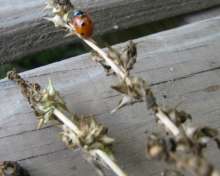
  HEIRLOOM- Sharp Seeded Spinach
We grow this variety mostly because of it's historical significance.  It was the spinach of Thomas Jefferson's time.  The seeds have prickly spines unlike most of today's varieties. Gives us great pains to harvest seed!  It is an easy bolter in the spring and we have found it a far better edible when sown in fall for an early winter harvest or to overwinter.  Hardy.  (50 seeds)

  BLEND-  Spinach Mix 
All round seeded types, quite a mix of leaf variations and plant characteristics that will allow you to select from and raise your own designer hybrid. Spinach produce seed at the expense of leaves during the long days of June so one has to get an early spring start or late summer start (or overwinter) to produce the best leafy plant for culinary use. When you plant the spinach and when you harvest will have an affect on your selections and make for a more adapted spinach for your needs. Select for lower bolting tendency. (100 seeds). 


Family: Fabaceae (The Legume Family)

Genus: Glycine

SOYBEAN, EDAMAME (Glycine max)

    BLEND- Edamame Mix
Have you had edamame yet?  Pull the plants out of the garden and into a kettle of salted boiling water and when the pods are soft enough to squeeze out the beans, toss the plants onto newspaper placed over the picnic table outdoors and gather around with friends.  Sort of like eating boiled peanuts in the American South, this long standing Japanese custom which is becoming popular here does differ.  Guests jump right in and harvest the soft pods off the plants. This mix is from the most productive of our 2007 harvest.  There are mostly green, black and white/tan seeded kinds. Discover the best edamame for your growing conditions.  Watch date to harvest, length of harvest, growth and productivity, ease of shelling and flavor.  Do your own evaluations but always allow some pods to remain to ripen, dry and produce seed so you can save the best for the next planting.  These are soybean varieties developed especially for edamame. (40 seeds)

Genus: Phaseolus

Beans are sensitive to cold temperatures and frost. They should be planted after all danger of frost is past in the spring and soil temperatures reach 60°F. Plant seeds of bush beans 2 to 4 inches apart in rows 24 inches apart. Plant seeds of pole beans 4 to 6 inches apart in rows 30 to 36 inches apart along a fence; or in hills around a pole (four to six seeds per hill) 30 inches apart. Beans are mostly self-pollinating so you should be able to save seed from particular plants in the row. For seed crops, let the bean pods dry right on the plant until late fall. If the climate has high humidity or your crop is in danger of being blanketed by snow, pull the plants and hang them upside down in a shed or other protected location with good air circulation. When the pods are brittle dry you can shell them.

RUNNER BEAN  (Phaseolus coccineus)

BLEND- English Runner Bean Mix
Rich soil, cool weather and ample moisture allow the European/English Runner Beans to produce bumper crops.  We collect the best of the white and red flowering kinds which can put on quite a show when trellised, I do like the display of flowers; but the best part is in the production of the long tender crisp green pods.  No Scarlet Runner here, these are mostly modern developments for the very best eating quality- juicy, flavorful and mostly stringless. Spray them with water during high temperatures, mulch, keep them from drying too much. This group is apt to attract pollinating insects which do have the ability to allow crossing to occur. (20 seeds) 

LIMA aka Butterbeans (Phaseolus lunatus)

  HEIRLOOM BLEND- Pole Lima Bean Mix
Climbing, twining pole lima beans generally yield quite well on Long Island; surprisingly, better than many bush kinds.   These are best planted along a fence or netting. They usually climb 6 feet and more. There is considerable diversity in the pole lima group.  Beautiful range of seed color and patterns, many of these are relatively untampered with varieties not far removed from land-races and primitive cultivars. The center of genetic diversity for limas is probably Guatamala where small seeded kinds that work for us best can be found in cooler higher elevations. We plant the seed late (in June). (20 seeds)


Common Garden Bean aka French Bean, String Beans, Dry Beans, Bush Bean, Pole Bean (Phaseolus vulgaris)
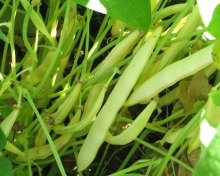
  BLEND- Bush Garden Beans (round pod)
We put together quite a selection of bush garden beans (dwarf french) from many sources including our own production of the more unusual kinds.  Look at each plant for the qualities that you admire and save the seed of those that you like the most for replanting next season. Mostly green, some yelllow (wax) and purple pod; all stringless kinds, very good quality pods.  (100 seeds)
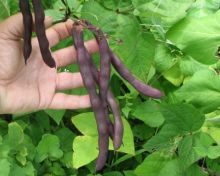

BLEND- French Filet Bush Beans (round pod)
These are the skinny filet or "haricots verte" beans, used at a very immature stage;  green and yellow kinds, all round podded.  Unfortunately, they have a limited harvest window for maximum tenderness, don't leave them long in the garden. Very gourmet. Find a kind in this mixture that does best for you and make it your own sustainable crop. Several interesting older kinds originaly from Europe. (50 seeds) 

  NATIVE BLEND- Cattle String Bean (round pod)
Most produce seeds with beautiful cattle bean seed patterns but also included are other wild sprawling bush and semi climbing types, known for great green bean flavor used when young. Some will require snapping the end and pulling off the string (real string beans). Older, untampered native varieties that we maintain and grow in one large bed for a seed crop. Some more productive beans here will double as a good dry bean (soup or baking). (30 seeds)


BLEND- Bush Garden Bean Italian Blend (flat, wide pod)
These are the bush Romano type beans that produce wide pods.  We enjoy these generally large round seeded kinds which usually freeze nicely prepared whole of frenched.  Some colorful pods as available but mostly green, green striped purple, yellow, purple and yellow stiped purple. Many consider these large Italian flat podded types to have the very best texture and flavor. (30 seeds). 

  CV- Bush Bean: Blue Ribbon Bush
A purple striped green variety of Romano introduced by Long Island Seed Co. in 1982.  Hazera Seed Company supplied us with the bean seed as well as the first "Beit Alpha" cucumbers and long mideastern lime green zucchini I had seen.  Our customers in 1982 didn't know what to make of those introductions and we didn't sell much seed for Hazera but they were beautiful varieties even by today's standards. They no longer market the bush bean. Blue Ribbon Bush produces plants that can be somewhat sprawling to 22" or so.  Terrific green bean flavor.  Seeds are horticulture bean shape, coffee with dark brown mottle.  (30 seeds)

   BLEND- Pole Bean Blend
The garden wouldn't be the same without climbing pole beans.  The diversity of this blend will delight you.  Narrow and wide pods, purples, yellows, greens and striped kinds.  All of the varieties have been selected for their good flavor and high yields.  Harvest the pods young and often for the best quality and extended harvest.  Provide poles or a fence to climb on. Make note of your favorites so that you can target them especially for your future seed crop.  There are over a dozen varieties in this mix. (40 seeds)

Genus: Pisum

Garden Pea, Snow Pea, Snap Pea (Pisum sativum)
Hardy Annual. Sow early. Plants withstand light frost, germinate at low temperatures. Mostly self pollinating.

  BLEND- Garden Pea Blend
English peas, shell them and enjoy them.   I can't help but open the pods in the garden to nibble on the fresh, tender little green peas.  All wrinkled seeded and sweet. Vines can be self supporting, less than 24" or a bit taller.  This blend does not contain the taller growing varieties.  Once you save the seed from this crop, next year's planting from your saved seeds will just get better. (100 seeds) 

   BLEND-Monk's Madness Snow Pea
These are some of the peas that Gregor Mendel probably worked with and which produce nice snow peas harvested when flat and before pea seeds develop much. Yellow, Purple and Green pods in one packet. The purple is beautiful but not sweet but will look great in stir-fry with the others. Yellow is bright and refreshing and we have several interesting green podded kinds for the sweetness.  Harvest young for maximum tenderness.  All provide a nice garden snack and quickly stir-fry. These require a fence or netting of 48" or more to support tall vines.  (40 seeds)

BLEND-Dwarf Snow Peas
Easily managed pea vines are self supporting more or less, white and purple flowered kinds, nice for flower harvest or shoots favored in salads, edible flat pods harvested before they start to swell with seed. Includes the heirloom Dwarf White Sugar (white flowers) and Dwarf Gray Sugar (purple flowers) and some others. All green pod. (40 seeds) 

  BLEND- Edible Pod Snap Peas
Easily managed pea vines are self supported (more or less).  These are the sweet, crunchy, juicy peas which are eaten pod and all when they plump up in size. Many kinds, all less that 30" or so, mostly developed in US, some developed in Europe. Does not contain the taller Sugar Snap variety. (40 seeds).

Genus: Vicia

FAVA BEAN aka Broad Beans (Vicia faba)
Hardy annual. Sow early or transplant. Withstands light frost. Some degree of crossing.

  
  BLEND- Fava Bean Mix

The key to producing a good crop of fava beans is to start them early (sow in late spring) and grow them fast before hot weather sets in.  Often treated as a fall or over-winter crop in mild areas.  We have collected many fava varieties hoping to select a better type for growing on Long Island.  We're pleased to share some of these with you especially if you also have an interest in selecting a better performing variety. You'll find several kinds here from different parts of the world. If you're new to eating green favas, search online for preparation methods. Very different from your other beans. (20 seeds)

Genus: Vigna
Tender Annual. Prefers warm soil and growing conditions.
YARDLONG BEAN (Vigna unguiculata)
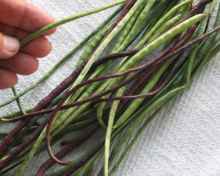
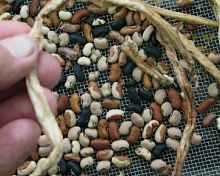
    BLEND-Yard Long Bean Blend- Climbing
These are a kind of cowpea (Vigna) that have been selected for their long thin green (or red-purple) beans in the Orient. They are of excellent flavor and tenderness when harvested young (12-24" long) before pods swell with the developing seed.  These do very well on Long Island's sandy soils, better when irrigated.  Their productivity is greatest during the hot summer days. Versitile, tender leaves can be cooked as a potherb, long and thin tender green beans are good steamed or stir-fry (loop into knots and bows for culinary art) and seeds are protein rich.  Seed crops are easy to produce on Long Island and we maintain about 10 different kinds.  (30 seeds)

CV- Stickless Wonder- Bush
Interesting Yard Long Bean that produces a top-set cluster of thin green beans harvested at a foot long.  The plants are upright bush form to 22 inches or so.  Red seeds. Seed crop produced at Flanders Bay Farm.  (30 seeds)

CV- Black Eye- Bush
Most folks in this part of the world would call this a cow pea or black eye pea.  Small, roundish dry seeds could be used for making a pot of black eye peas (just add corn bread). Novel, because this cowpea is similar in habit to Sickless Wonder and preferred for the clusters of tender, thin; somewhat nutty green beans produced at the tops of the bushes harvested before seeds develop. There are several cowpeas, especially heirloom kinds that produce green beans of good quality as well as a dry bean. (30 seeds)


Family:  Lamiaceae (mint family)
Basil (Ocimum basilicum)

HERB-  Basil Blend
An impressive assortment of a dozen basils with surprising scents,  flavors and growh forms.  The Italian pesto kinds and other culinary favorites predominate but there will also be those with citrus undertones and very spicy indian and asian kinds. (100 seeds)


Family:  Malvaceae (The Mallow Family)

Okra (Abelmoschus esculentus)

    BLEND- Northern Okra Mix
This summer our okra patch was nothing less than extrordinary.  We didn't have a problem producing bumper crops even with the classic southern green heirlooms and red fruited kinds.  This is exciting since we were able to produce an intentional mass cross of a dozen varieties including very early Asian varieties.  This mix should provide ample genetics for new developments. Pretty mallow flowers. (40 seeds)


Family: Brassicaceae (The Mustard Family)

Genus: Brassica

Broccoli aka Calabrese (Brassica oleracea-botrytis group)
Half hardy annual.

  BLEND- Broccoli Blend
We produced the first broccoli blend for gardeners in 1979 and marketed it through Long Island Seed Company.  It consisted of early, midseason and late kinds.  Gardeners liked the idea but the federal government didn't since I failed to list the specific percentages of each variety in the packet by weight; the rest is history.  Now, it seems that every seed company markets a broccoli blend!  This experimental blend includes some unusual kinds. There are well over a dozen kinds including some hybrids.  (40 seeds)
 

BRUSSELS SPROUTS (Brassica oleracea- gemmifera group)
Hardy/half hardy biennial.

     BLEND- Brussels Sprouts Blend
We found a treasure trove of sprout varieties including heirlooms and hybrids and have assembled a blend which even includes some purple types mostly as a curiosity (not known for being very productive).  Find the ones that do the best for you, eat some of the sprouts if you wish and root cellar the plants to over-winter and set out for seed production the next year.  See what you can develop if you want. (50 seeds) 

Heirloom- Long Island Brussels Sprouts
I liked the old Long Island Brussels Sprouts available when I was a kid. It had a shorter stalk that a lot of modern varieties and always grew well, producing large firm sprouts. Somehow present strains just don't seem the same but we'll let you be the judge. This is seed is from a new seed source for us, as we continue our quest to find the Long Island sprout we remember. Not our production. (100 seeds)

Cabbage (Brassica oleracea)
Hardy/Half Hardy biennial.

  BLEND- Complete Cabbage Blend
Cabbages of all kinds, early, mid and late, red and green, savoyed and plain leaves, pointed and drumhead. They're all here- have fun! Sow some seed early, some seed in mid-summer.  Over winter your very best and grow them out for seed in the second year. (100 seeds) 

BLEND- Cabbage (Early Kinds)
Mostly early green cabbages, high quality fast growers that are transplanted into the garden around the last frost date and grown quickly in fertile soil for high quality; sweet and tender heads. Sow these seeds in early spring and set out as transplants in late spring, harvest in summer (harvest in 50-75 days). (50 seeds)

BLEND- Cabbage (Late Kinds)
These are cabbages that are bred to be planted (as transplants) in the field in June for a late Fall harvest (with 80-100 day maturities).  Mostly the best green and blue green storage kinds but also red and savoy kinds.  (50 seeds) 

  HEIRLOOM- January King
A beautiful large green cabbage with moderately savoyed outer leaves and a beautiful pink blush that develops with cold weather.  This cabbage takes a while to produce it's head but a winter harvest finds a delicious tender versitile cabbage.  We don't have much difficulty getting a seed crop in the second year since it is quite winter hardy and keeps in the field so well with mulching. (40 seeds)

Collards (Brassica oleracea)
Hardy biennial.

COLLARDS

BLEND- Collard Mix
Loosely heading, semi-heading and non-heading leafy cabbages (collards) which have good flavor and tenderness characteristics. These are nice early on when very young and then again when the cooler frosty weather sets in.  A pot of collard greens with ham and warm cornbread on a cold fall day is pure pleasure even for a northerner like me. We have made up a mix for trial, evaluation and possible seed production in the second year depending on your interests.  Interesting material including some southern european "leaf cabbages". (60 seeds) 
   

HEIRLOOM- Southern Greasy Collard (Green Glaze)
Seed of a rare collard with the waxy leaf trait.  To maintain the purity of the waxy leaf trait eliminate other brassica in flower at the same time; but may be a trait worthwhile introducing to other brassicas through more intense breeding work as a way to impart insect resistance. We are working on Greasy Collard/Kale crosses at present.  Collards are biennial, you will have to winter over plants for seed production.  "Greasy" is very cold tolerant. (50 seeds) 


Kale aka Scotch Kale, Russian Kale, Scotch Kale, Ornamental Kale, Siberian Kale (Brassica napus, Brassica oleracea)
Hardy/Half Hardy biennial.

  MULTILINE CROSS-Mostly Red Kale
These are compact, curly leaved scotch kales and the result of crosses made at Flanders Bay Farm in 04/05 when we over-wintered bright green and brilliant red/purple hybrids.  They will develop the best color and flavor after the fall frosts and can be quite attractive into the winter. We noticed that the F1 generation produced 80% purple-red fall color with minor greens and bluegreens (not all crosses).  See if you can over-winter the best and develop an even more diverse seed crop.  Very winter hardy. (50 seeds) 

  BLEND- Diversity Kale
This is a mixture of kales from around the world that have ruffled and smooth leaves, tall and compact plants, many colors and growth forms including some that are considered so beautiful as to be considered ornamental. All edible and particularly so, after frost. There may be a minor amount of decorative leafy collards in here as well. A traditional winter meal of boiled kale and potatoes turns into a feast when the leftovers are chopped and spiced up a bit, then fried up in a butter/olive oil blend like one would prepare hash browns. (60 seeds) 

  CV- Cavalo nero (Black Kale, Dinosaur Kale)
A very beautiful, deep gray-green colored, easy to grow and productive kale.  The leaves are large enough to harvest one at a time to make a plate of kale.  Enjoy it at young stages but for me, I wait until after the first frost and then harvest it into the cold of winter.  Very hardy and improves in flavor as it grows colder. (100 seeds)


CAULIFLOWER (Brassica oleracea -botrytis group)
Half Hardy Annual/Biennial

   BLEND-Cauliflower Mix
I just can't manage to produce a cauliflower seed crop. Perhaps that will change when we complete work on the polyhouse to create a better over wintering environment. We collect many varieties both early and late, from different parts of the world and put a sample of seed in the freezer where it will stay dormant perhaps for years.  Some of these neat varieties are available here for your enjoyment and experimentation.  Especially interesting in this blend are the green, yellow and purple compact headed kinds which will make up about 10-20% of the blend, white curd dominates though. Cauliflower isn't the easiest crop to produce quality heads of, you must do some research before you opt to plant it or be disappointed. (40 seeds) 

> Kahlrabi (Brassica oleracea-gongylodes group)
Half Hardy Biennial.

BLEND- Kohlrabi Blend
Not very diverse; but we include white, purple and green kinds from various sources. Just begging to be mass crossed for some more diversity to select from. We just haven't gotten around to it yet. I'm always amazed at how little kohlrabi is grown and eaten in this country. Check out some of the different ways to prepare this vegetable on the internet.  It's a wonderful veggie.  (100 seeds) 


Kai-lan (Brassica oleracea (var. alboglabra))
Hardy Annual.

  BLEND- Kailaan (Kai-lan) Mix
This is a group of chinese tender stalk broccoli or Chinese Kale that form tiny clusters of buds much like Broccoli Raab (but Raab is not a broccoli but a rapa) and are used with their long, slender stems and leaves chopped into stir fry. One of the parents of "broccolini", a proprietary cross that is not available to the public. As with so many of the brassicas, fine tuning of the planting date can be a major factor in the crop's performance. Tender stalks require quick growth, cool conditions and ample water availability and fertile soils.  Some people enjoy the leaves as a mild, tasty alternative to the more bitter broccoli-raab. Some folks like the bite of the raab better. Go figure. (100 seeds)

CV: De Lustof Kale
Lieven David sent me seed of what he calls a "Fodder Kale", the kind of kale that is grown mostlly for livestock, chickens love these kinds of greens when there isn't much else to forage. Lieven is a backyard plant breeder in Belgium. He explained, "My fodder kale story is like this: two plants emerged on my field 4 years ago. My only reasonable explanation, after eliminating all other options: some bird must have sown them. These kales grew 1 m tall, and they had white flowers. They may have come from some OP or F1 somewhere, but then there weren't any fodder kale seed crops nearby. Anyway, these two plants produced a nice load of seeds. The next generation turned out to be exactly the same...quite a lot of Lusthof customers are growing this fodder kale, and perhaps saving seeds." . Interesting! The white flowers mentioned by Lievon indicate a Brassica alboglabra or white flowered Asian Kale. I am curious if this is an Asian/European cross since B. oleracea (yellow flowered European Kales) will cross with B. alboglabra-Gailon (taxonomists; in fact, consider these to be the same species). White flowers seem dominant in crosses I have made. I will grow it this year and see. These are original breeder seeds.
(50 seeds)

Chinese Cabbage (Brassica rapa-campestris, B. pekinenis)
Half hardy Annual

BLEND-Chinese Heading Cabbage Mix
We were happy to discover these great barrel, round or cylindric head cabbages with fairly compact self-blanching hearts. Shred for slaw or stir-fry. Discover their versatility. We have over a dozen cultivars that we mix for you to experiment with and we do mean experiment.  You will have to determine the cultural practices that allow you to bring these to the best quality.  Many kinds will bolt unless grown as a quick crop under the cooler days before frost, few will succeed in summer heat.  Is there one kind in your diverse planting that does well for you; then, separate it out to produce seeds.(100 seeds)


Mustard Greens aka Mustard Spinach, Tender Green, Indian Mustard aka Leaf Mustard, Mizuna (Brassica juncea, Brassica perviridis, Brassica rapa-japonica)
Half Hardy Annual/Biennial.

BLEND-Mustard Greens Mix
A collection of mild to spicy greens from Asia as well as the US South, where cold tolerant mustard greens (and purples) provide a welcome easy to grow "greens" through the year.  Somewhere between asian cabbages and turnip greens.  Its difficult to draw the line since cabbages, pak choi, bok choi, mustard lettuce, mustards and turnip greens and raab are all related.  It all gets blurred when you realize that there are hundreds of these interesting greens utilized in central and eastern Asia for a variety of dishes and we're just beginning to realize that mustard is no longer just "Southern Curled".   This blend consists mostly of leafy kinds fine in soup or salad, boiled or steamed, layered in a sandwich with tomato, etc. (100 seeds)


Turnip aka Summer Turnip (Brassica rapa)
Half hardy biennial.

BLEND-Summer Turnip Blend
A assortment of small, quick growing turnips that produce tender, mostly white or yellowish round roots but also pink topped kinds and red ones and a few odd shapes.  Some of these are considered very mild and sweet when harvested in 30 days and make better eating than salad radishes. Others take more time to size up. They are used fresh and in soups, cooked with their  "greens", and stir fried.  The "greens" are considered choice.  (100 seeds)

  HEIRLOOM-Japanese Long Turnip (Hinona Kabu- Kabu Turnip- Cherry Blossom Turnip)
This turnip was a real hit at the farm since 2004.  It has an attractive pink shoulder that grades quickly into a long white carrot- like root to 12 ".  It produces a crop quickly in the summer and holds it's crisp sweet flavor into the late fall when they are at their best in our opinion.  They are mild and great for snacking and salads.  Originally from Kitazawa Seed Company. (50 seeds)

Turnip Greens, seventop turnip, (Brassica rapa, Brassica septiceps) Half Hardy Biennial.

BLEND- Leaf Turnip
 Some consider these to be the best turnips for mild "greens" which are boiled, steamed or stir-fried.  Most seed in this mix are the F2 generation of some commercial hybrid kinds.  Probably best for an early spring crop or quick fall crop that can be used into the winter; when seed saving,  sow in late summer, mulch and over-winter.  We are not selecting for the root quality-we assume it's poor. (100 seeds) 


Broccoli Raab (Brassica rapa)
Hardy Annual.

BLEND- Raab Blend
You will have to sow this blend in spring and again in fall and select out your best performers depending on your preferred harvest times.  This is a blend of rather wild looking varieties imported from Italy.  We haven't attempted to do any Raab selection work so far but we have some out in the field over wintering.  Raab is a leaf turnip, not a broccoli and does not cross with broccoli.  Harvest the greens at a young stage, certainly before the small bud clusters show color.  The leafy greens and upper tender stems have a wonderful tangy flavor.  We boil them for a few minutes and then stir fry them with oil, salt and cayenne; then add a squeeze of lemon. (100 seeds)


Bok Choy aka Pak Choi, Chinese Mustard (Brassica rapa)
Hardy Annual.

BLEND- Pak Choi Mix
Pak Choi and some related similar kinds that are grown for their succulent white and green petioles and leafy tops; compact and tall forms. We have collected dozens of pak choi and similar kinds of oriental petiole mustards over the years.  Here is an interesting blend in which you are apt to find some especially suited to your stir fry needs.  Generally quick and easy to grow especially as a spring/early summer crop. (100 seeds) 


Rutabaga aka Swede Turnip, Fall Turnip (Brassica napus)
 

BLEND- Rutabaga Blend
The large sweet turnips (also called "swede turnips") gathered in the fall and stored through the winter are a great favorite for Thanksgiving feasts, not summer turnips which are a different species.  Great when boiled and then mashed with a bit of butter and served alongside or with mashed potatoes or cubed in winter soups and stews.  We have a number of nice varieties in our seed bank which we put together for this blend.  Not a very diverse gene pool though, many old strains have been lost. We plant the seed in late June, roots become large in the late fall and can take frost. (100 seeds) 


Genus: Raphavus

Radish (Raphavus sativus)
Half Hardy Annual/biennial.

 May bolt and produce seed first year, roots of some varieties will not survive below 20°F freeze and must be wintered over in root cellar or some other way. Insect pollinated, will cross. When pods are inflated with seed, pull and lay on tarp, keep dry; over time, allow pods to become very dry and brittle to crush finely and process seed which will fall out and settle to the bottom of the chaff.

BLEND-Round Summer Radish
Easter Egg plus, a mix of white, pink, purple, white/red bicolors, red small, quick growing radishes. These will produce within 30 days.  (150 seeds)

BLEND- Long Summer Radish
Medium long and long, quick growing all red, all white and long red/white bicolored radishes. Not too diverse but interesting.  Some from field crosses we facilitated between different extra long kinds.  These will produce within 30 days. (60 seeds) 

BLEND-Winter Radishes
The biggest, longest, roundest, wildest radishes. Korean, Japanese, Spanish, German and Chinese types. Very beautiful, different colors, shapes and diversity in flavor. We prefer the sweet, crisp kinds in this collection which have become favorites. You may prefer the spicy hot ones!  They're all here.  These will produce from 40 to 80 days.  (100 seeds) 

Family: Poaceae (The Grass Family)

CORN (Zea mays)
Tender Annual. Wind pollinated, all Zea mays will easily cross if shedding pollen at the same time.

BLEND OP/F1-Sweet SU Mix
Normal sugary (su) corn varieties are difficult to find today, especially those hybrids which were developed in the days before the "supersweets" that still have the old fashioned meaty flavor of corn.   You will find many mid-season varieties in this mix of both open pollinated types like Golden Bantam and traditional hybrids like Iochief.  Plant them and they will continue to hybridize and diversify, then select your best for seed saving.  Yellow and white kernels.  Mostly middle to late larger maturing varieties  (70-85 days) which can be saved together.  Make your own traditional hybrids. Long period of harvest because of diversity.  Quick conversion of sugar to starch, so have the water boiling when you harvest!  Heterosis or hybrid vigor was first documented in the corn hybrids produced at Cold Spring Lab here on Long Island in the early 1900's.   (50 seeds) 

  MASS/BLEND- Sweet Ashworth
Ashworth has been a popular "su" type sweet corn among short season gardeners.  Here on Long Island it ripens by fourth of July from an early planting.  We combine the original with early hybrid types including 'se' kinds for extra sweetness and longer standing after harvest.  Generally shorter stalks and smaller cobs than other corns. (50 seeds)

BLEND F1-Sweeter SE Mix
The sugar enhanced corns (se) varieties, mostly homozygous types, are becoming the most popular types because they are very tender, very sweet and the sugar conversion to starch happens at a much slower rate. We have varieties with a range of maturities from mid season to late (70-85 days), both yellow and white types tha will produce bicolors when grown together. You may want to intercrop this with Sweet SU corn mix which can give you the best of both worlds. These have slower conversion of sugars to starch.  No need to isolate se and su types. (50 seeds)

  CROSS/BLEND- Sweet Festival Multicolor
A mixture of medium kernel sweet corns that will produce a mature dry cob with many colors- especially rich in blues and reds.  When at the milk stage (fresh eating), colors are only moderately developed and may not be especially appealing when you boil the ears but I enjoy harvesting the dry ears for seed and unhusking them to see the rich colors. This is a mid season corn which should mature in 75 days or so.  (40 seeds)

  CROSS/BLEND- Rainbow Inca Revisited
Differs from Sweet Festival Multicolor in that this is developed from Alan Kapular's large kerneled 8-12 row corn and is a bit later at 80-85 days.  Predominant yellow and white kernels with a spattering of blue and red. Acclaimed roasting corn for the grill with a touch of added sweetness from some 'se' sweet hybrids. (40 seeds)

Corn- Decorative Ears- Ornamental- Indian Corn

  BLEND- Indian Corn Blend
A fine fall decorative corn, ears are harvested when the plant dries in the field, wrapper leaves are pulled back to expose the colorful kernels making up the ear.  Increasing demand between Halloween and Thanksgiving.  This is a flint corn which can be used as a fair quality "hard" corn meal and is more resilient to molding in the field during wet autumn weather.   (100 seeds)


Corn- Decorative Foliage Types


  CV- Old Gold Stripe
A truly great corn from the Maize Genetics Cooperation Stock Center.  This is a field corn, mostly dent which produces large ears of cattle corn.  Leaves are green with bright gold stripes.  Can grow 5-6 feet tall. Rouge out plants that don't have the expected coloration before their tassels produce pollen that will deteriorate the quality of the others if allowed to cross.  Limited. (10 seeds)

CV-Japonica Stripe
An heirloom foliage corn also known as "Quadricolor" because it has leaves that under good conditions (enough spacing between plants, full sun), will develop stripes of pink, yellow, white on a green background. Dark purple/black colored flint corn. (25 seeds)


Corn- Popcorn

  SELECT: Autumn Delight
Full sized popcorn kernels on a full size 8" cob and in a variety of autumn colors.  Developed at FBF primarily as a popcorn of good quality and expansion ratio as well as an ornamental and festive "Indian Corn", a decorative variety of long-lasting flint corn for Thanksgiving Holiday decor.  Tall sturdy stalks.  Shows promise as an early and productive kind which resists borers and racoon damage.  (40 seeds)

CV- Miniature Rainbow Popcorn
Blend of a colorful flint corn or Indian corn which produces small 5"-6" well-proportioned cobs which make cute fall decorations when bunched.  Small, generally rounded kernels will pop into nutty little white puffs but are not generally used for snacking. (40 seeds)

  CV- Patena Miniature Popcorn
Patena is our new flint corn or Indian corn which produces small 5"-6" well-proportioned cobs with bronze and gold kernels which actually take on a patena as cobs age like the way some metals become subdued. Difficult to describe. The husks are lavender tinged and it holds it's color when dried and used for fall decorations when bunched.   Small, generally rounded kernels will pop into nutty little white puffs and can be used for snacking. (30 seeds)

CV- Yellow Popcorn
Attractive large 8" -9" cob popcorn with rounded yellow kernels that have a good expansion ratio when properly cured for storage.  Long Island has a good climate for producing high quality popcorn. Indian summer is a good time for the ears to dry or cure on the stalk. (40 seeds)


Sorghum

Sweet Sorghum (Sorghum bicolor)

    HEIRLOOM BLEND- Sweet Sorghum Blend
An assortment of sorghums which produce delicate, tall grassy stalks similar to sweet corn.  Use as a background and in the fall there will be seed heads in colors in shades of cream, rusty reds, tan and black that will last into late fall.  Very nice for fall decoration and bird feed on the stalk.  Late in the season (100 days),  the sugary juices accumulate in the stems. A pleasant snack to chew on or crush to produce molasses or syrup.  Folks around here are always surprised to try chewing on the stalks.  We cut some really sweet stems up to sell as tea stirrers at the farmstand which created quite a bit of interest during pumpkin season.  Our blend has been selected for high sugar stalks as well as decorative seed-heads. Many varieties of historic importance.   (30 seeds) 


Family: Cucurbitaceae (The Melon and Squash Family)

CUCUMBERS (Cucumis sativus)

Cucumber- Kirby (Pickle)

  MASS CROSS/BLEND- Pickle Cucumber Blend
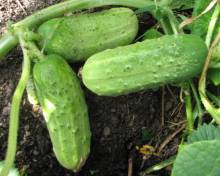
More than a dozen varieties of small kirby size cucumbers used for salads or whole pickles were mass crossed and the results are included in this mixture.  Both white and black spined varieties were used in the cross, all green skin color.  A few new kinds collected recently also added. There is plenty to work with here. (30 seeds)

BLEND- Small Vine Cucumber Mix
 Restrained vines and small fruit make this an appealing gene pool for patio and container gardeners, harvest when small salad use or pickles and for continual production. Vines spread generally less than 24". (30 seeds) 

Cucumber- Slicer

BLEND- Slicing Cucumber Blend
 These are medium to large long cucumbers that are mostly used as slicers.  More than a dozen standard sized cukes make up this mixture.  Mostly American slicers such as Marketmore types.  We are also including some heirloom/hybrid crosses and american/mideastern crosses that we made and are excited about.  These are fine for ground culture especially with drip irrigation.   (30 seeds) 

Cucumber Slicing- Asian

BLEND-Long Fruit Cucumber Blend
Sweet and crisp (when freshly harvested) longer and thinner fruited cucumbers.  These have been developed in Japan, China, Korea and southeast Asia.  Thin skins make fruits easy to digest.  In Asia, cucumbers aremostly trellised to conserve space and produce straight fruit.  Included are asian-american crosses selected for longer than average length fruit; tender and sweetness without bitterness. Some interesting genetics in one packet.  (20 seeds)


Cucumber- White

   SELECTIONS- OSP Boothby's White
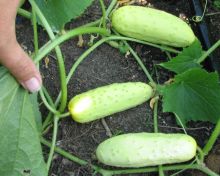
Selections from the Cornell cross:  Boothby x Marketmore made to impart greater disease resistance in Boothby, a small creamy white heirloom cuke.  Seed production at Flanders Bay Farm is the result of the Organic Seed Partnership (OSP) which encouraged the development of varieties bred and selected for organic systems.  You may want to eliminate any plants producing non white fruit and select for white cukes (black spine) or harvest the light green- yellowish fruits that sometimes appear and which are quite refreshing. Limited (10 seeds)

    CV-  Long White  OP
This is our open pollinated selection of an Asian long white (white spine) hybrid. Selected for long bright white fruits, slight taper or neck at stem end.  Sample (20 seeds) 


BLEND- Mixed White Cucumbers
Mostly white cukes of various sizes but also light green grading to white and off white creams and lime colors.  Slicers and picklers.  We are always looking for more diversity in white cukes, by crossing these and various greens you can develop some interesting genetic combinations to work on.  Includes quite a bit of unusual and diverse forms. Sample (20 seeds)


Cucumber- Melon Cucumber aka Armenian, Yard Long, Serpent Melon- (Cucumis melo var. flexuosus)


Cucumber- Italian Carosello

  BLEND- Carosello Mix
These are the small cukes that are regional specialties in parts of Italy.  They are mostly round to oval shaped, light to dark green and with varying amounts of light fuzziness.  A few resulting from experimental crosses.  Refreshing when harvested at a small size.  These are not cucumbers but are used like cukes.  They will develop a musky fruitiness as they mature and look more like canteloupes which they will cross with (both are C. melo).  Keep carosellos away from your melon patch.  Crossing with each other doesn't benefit either group.  (20 seeds).

BLEND- Armenian Long Cucumber
Tend to be long fruited, smooth skinned kinds that are moderately ribbed. Good vining kinds that are often trellised to produce straight fruit. Ground culture will result in serpent shaped cucumbers.  Fine quality, mild flesh when harvested young. They require rich soil, plenty of warmth and ample water.  Not particularly diverse but there are white and green kinds included.  These are C. melo and will cross with other C. melo species. (20 seeds)

Mexican Sour Gherkin (Melothria scabra)

  CV- Mexican Sour Gherkin
This is now the fourth year that we have produced a crop of the tiny grape-sized gherkins.  Tangy and crunchy when they fall to the ground from their vines, a bit sweeter when harvested before drop.  Some folks like these others don't care for the slight bitterness and chewy skins.  We think they're a nice addition to salads along with cherry tomatoes.  Vines are thread-like but grow in a vigorous sprawl over anything they can climb.  (20 seeds). 

Gherkin (Cucumis anguria)

CV- West India Gherkin
 Roundish soft spined fruit look a bit like hedgehogs are best an inch or so in size.  They are a curiosity to those who never grew them but were one of the most common pickles a century ago.  Fine fresh eating, even better when pickled whole.  Productive vines sprawl over the ground.  Always a hit at the farmstand.  Easy seed crop to produce and won't cross with melons or cucumbers! (30 seeds).


CANTALOUPE & MUSKMELON  (Cucumis melo )

  BLEND- Cantaloupe: Orange Blend
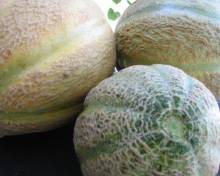
A very diverse blend of dozens of cantaloupe / muskmelons.  Mostly conventional orange fleshed.  Heirlooms, new developments and experimental crosses.  Many of the best.  There is a lot here to select from.  (30 seeds) 

  BLEND- Cantaloupe: Green Blend
Mostly green-fleshed or crosses with green -flesh parents.  Refreshing, melting, fruity sweet flesh.  There may be some orange kinds in the mix. (30 seeds) 

  SELECTIONS- OSP Golden Charentais
Selections from a Cornell cross between a powdery mildew resistant Charentais and the american melon, Golden Gopher.  The selections are still rough and in need of additional selection but we think it's already a winner.  We'll continue to work on perfecting this and invite you to help by sending us a few seeds of any outstanding tasting melon that you raise from this seed.  Seed of the original cross was made available through the courtesy of the Cornell-Nofa-NY Organic Seed Partnership to develop varieties for organic systems. (20 seeds)

CV- Delicious 51 PMR
A new release of an old development from Cornell which imparts even more disease resistance to a popular mainstay, Delicious 51.   Cornell added powdery mildew resistance to Delicious 51 many years ago but the seed wasn't brought into commerce until interest in the organic farming community prompted a few small seed producers to raise a seed crop.  Once again demonstrating the need to reginalize small seed production and get some of the great varieties sitting on breeder's shelves out into the farming community.  Sweet, thick aromatic orange flesh, moderate netted 2-3 lb. fruit are produced early.  (20 seeds) 

SELECTIONS-  Minnesota Honey
A sibling of Minnesota Midget with honeydew parentage.  It is early and has a dark green skin that lightens up just before it is ready to harvest.  Melting orange flesh.  Productive.  We obtained the seed courtesy of USDA/NSSL.  It may have been crossed and shows some variability.  Might prove interesting to work with to develop stable lines with more disease resistance. (20 seeds)


SELECTIONS-Corky Cross
Produced small round 4" melons with a corky, crinkly netting, no ribs, mostly bright orange flesh, bright green at rind, tends to have a cluster of fruit near the center of the plant similar to Far North, one of the early old-time "birdnest" melons.  Breeding material from China.  Interesting, variable, possible interest to breeders with time on their hands.

SELECTIONS- Raccoon Cross
Late, very sweet orange fleshed, firm then melting cantaloupes, from a cross of large football-shaped heirlooms and the hybrid, Alaska muskmelom.  Expect variability. These are the melons that the raccoons always target first. (10 seeds) 

F2 CROSS- Asian Cross Cantaloupe
We crossed two sweet canteloupe melons from Asia resulting in a beautiful salmon orange fleshed melon wihout muskiness. Fruit is attractive,  netted round, mostly small with slight ribbing and might throw a green fleshed fruit from time to time. Expect variability.  The 2007 crop produced some off flavors.    (20 seeds) 

BLEND-Italian Cross Cantaloupe
 These are cantaloupes grown by our Italian neighbors in Deer Park, NY who brought the seeds over from near Parma, Italy. Variable, medium large netted, moderately ribbed melons with orange aromatic flesh.  We added stable, similar disease resistant cultivars from Italy to cross, which will produce some spontaneous F1's, extra vigor and disease resisance in the future.  (20 seeds)

SELECTIONS-Jammu (Cucumis sp)
This is an odd small cucumber-like variable melon with dark green fissured skin and sweet green or orange flesh. It's hard to figure these. Novel, maybe with breeding work they might be useful.  We haven't grown these out in a while being unsure what purpose they might serve.  Disease prone.  Originally from USDA/NSSL, collected in India. (20 seeds)

BLEND- Oriental Melon (Cucumis melo )
Our collection of a number of sweet oriental "pear" melons. These have thin edible golden skin sometimes with delicate silver stripes. The crisp white flesh is like as asian pear and makes a nice addition to fruit salads. These are early producers of palm sized oval fruit. One variety of Oriental Melon was sold as "apple pie melon" by an enterprising seed company in the 1800's and used just like sliced apples in a crust.  (20 seeds)

  BLEND- Exotic Melon Blend
Only somewhat exotic, these are crenshaw, honeydew, casaba and a number of other kinds that don't fit your normal definition of "cantaloupe" and are more familiar to gardeners in the warmer southwest.  There are also some interesting crosses that have been made in order to develop more regional lines.  Can't grow the "exotic" melons?  Don't be so sure.  Start them early in peat pots if you have doubts.  There will probably be something in our blend that works for you!   (30 seeds)


Genus: Citrullus
 WATERMELON (Citrullus lanatus)

   BLEND- Watermelon Blend
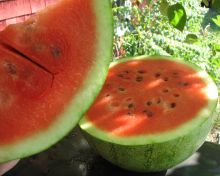
A selection from dozens of watermelons in our seed bank including red, orange and yellow fleshed kinds.  Mostly midseason kinds; very diverse, all sweet, nice kinds including some from our breeding program.  (30 seeds)

   SELECTIONS: Yellow or Green Skin F2
 A work in progress toward a good quality sweet red fleshed open pollinated watermelon with either yellow or green skin.  Small melons are very early maturing, vines are productive and have sweet flesh. Seed originated from selections of an F1 hybrid yellow skin melon which usually reverts to green skin in the F2 generation.  This year there are new additions of genetics from other golden skin melons.  Seeds will produce both plants that produce only green fruit and only yellow skin melons.  Fun.  (20 seeds)

CV- Tendersweet Black Seed
Yellow fleshed Tendersweet type melon, yellow flesh.  (20 seeds)

  CV- Yugoslavian Yellow
From the USDA seed bank a large black melon with bright yellow crisp flesh, fortunately for seed savers large black seeds are copious!  (20 seeds)

  CV-Cream of Saskatchewan
 A nice lemon ice white fleshed melon that is juicy and thirst-quenching, seeds received from melon collector and breeder Curtis Slyvester Showell from Muskrattown, MD many years ago who probably is responsible for preserving this variety. (20 seeds)

  SELECTIONS-Crimson Extra Early
Medium sized green stiped skin, slightly oval, sweet red flesh. (20 seeds)


Genus: Cucurbita
Tender Annual. Allow fruit to develop a hard gourd-like exterior before harvesting for seed. Winter squash are usually harvested at full-ripe stage, summer (immature) squash must be left on the vines to ripen fully. Insect pollinated. Members of the same species will cross.


SQUASH AND PUMPKIN FAMILY  Cucurbita spp

SUMMER MOSCHATA SQUASH (Cucurbita Moschata)

  BLEND-Summer Moschata
In Asia, Europe and South America these moschata squash were selected for eating at their tender immature stages.  Prepare them as any summer squash.  Less "watery", nutty and sweeter than zucchini.  These are vining plants. Summer Moschata types will mature into butternut or calabazza type squash in a variety of shapes (long, round, bell) and color patterns (tans and mottled greens mostly) which are in same genus and can be used as a winter squash.  What a gene pool this is!  Enjoy.   (20 seeds)


SUMMER SQUASH (Cucurbita pepo)

Squash- Summer- Pepo- Bush
Zucchini Mix

BLEND- Colorful Long Zucchini Mix
 A blend of a mass cross and hand crosses between pale green mid eastern zucchini, striped romanesco types, dark green and golden zucchini which will produce hybrid surprises;  also, open pollinated types of all the parent varieties.  Mostly compact to somewhat sprawling bush growth that produces the traditional longer fruit. This will please the zucchini connoisseur in everyone.  Every seed in the packet will probably produce a different type of zuke!  Maximum zucchini diversity in a single packet.  (30 seeds) 


Squash- Summer- Pepo- Bush
White/Cream/Lime Green Zucchini

F2 CROSS/ BLEND- White Zucchini Mass Cross
Mass cross and second generation hand crosses between various long white zuchini made during our evaluations of white (pale green) zucchini. These are very productive, mild kinds, favored for their nutty flavor and solid flesh.  (20 seeds)

  HEIRLOOM-Odessa White
One of the most productive of our zucchini; stocky zucchini fruit (more oval than long) which has light creamy green skin. Vigorous bush.   (20 seeds)


Squash- Summer- Pepo- Bush
Green Zucchini


F2 CROSS/BLEND- Black Zucchini Mass Cross
Mass cross and second generation hand crosses between dark green (black) zucchini open-pollinated and hybrid disease resistant kinds. You're apt to find enough material here to produce your own fine black zucchini selection.    (20 seeds)

F1/F2 CROSS/BLEND- Green Zucchini Mass Cross
Mass cross and second generation hand crosses of various kinds of long green zucchini, open pollinated and hybrid kinds.  Expect long light, medium and dark green fruit, compact bushes.  (20 seeds)


C. pepo
Squash- Summer Squash- Pepo- Bush
Yellow Summer Squash

BLEND- Summer Yellow Squash
Old time straightneck and crooknecks favored in the southern U.S., also some productive round and oval kinds, dark yellows, creamy yellow, a possible minor amount of green will appear since some of these are F2 yellows and have some green ancestry.  Mostly bush type growth. (20 seeds)


C. pepo
Summer Squash-Zucchini- OSP Series (PM Success x Romanesco)

  SELECTIONS- OSP Sprawling Greens
The best of the sprawling plants from a selection of Cornell Prolific Zucchini (Success PM x Romanesco) crossed with various green and dark green zucchini.  There will be a great variation in fruit color and even shape.  Yellows, light and dark greens as well as solids and stripes will appear.  There is a better than 50% chance that plants in this mix of crosses will have the sprawling characteristic where the main bush extends harvest by sending out one or more long vines.  Developed through the Organic Seed Partnership to develop new varieties for organic systems, a collaboration between NOFA-NY and Cornell University. Shows good powdery mildew resistance.  (20 seeds) 

  SELECTIONS-  OSP Sprawling Whites
The best of the sprawling plants from the Cornell Prolific Zucchini (Success PM x Romanesco) crossed with various cream to light green mid-eastern zucchini known for their fine flavor.  There will be a variation in fruit color and even shape.  A large percentage of the fruit will be cream to light green in color.  Expect a better than 50% chance that the plants of this cross will have the sprawling characteristic.  Developed through the Organic Seed Partnership to develop new varieties for organic systems, a collaboration between NOFA-NY and Cornell University.  Shows good powdery mildew resistance. (20 seeds)

  SELECTIONS- OSP Prolific (Shades of Yellows and Greens)
Vigorous bush with some plants showing a slight sprawling to compact bush habit.  Mostly long pale cream to yellow and green fruits,  light green to chartreuse predominates, solids and stripes;  continuous production through the season if picked.  Grown at Flanders Bay Farm from material provided by Cornell  (Success PM x Romanesco) for the Organic Seed Partnership.  Not at all uniform at this point in the breeding.  Select for zucchini shape.  Great promise for creating new varieties. Be part of it!   (20 seeds)

  SELECTION-  OSP "Yikes Stripes" Selection
Vigorous bush.  Seed saved from the beautiful yellow and white striped variations of Cornell Prolific (Success PM x Romanesco).  Perhaps you will be successful producing the beautiful white fruit with prominant gold stripes that has become more elusive in recent generations.  This is one selection that I would like to see less diversity in!  Please, if you have a plant producing an outstanding striped pattern, attempt to self it and save the seed!  You can help perfect this culivar.  (10 seeds)


C. pepo
Summer Squash-Zucchini- OSP Series (PM Caserta x Romanesco)


  SELECTION- OSP Super Caserta (Shades of Green)
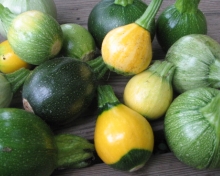
A very vigorous bush producing beautiful light and dark greens, mostly with striped pattern.  This is a cross of a selection from an unreleased Cornell PM Caserta and Romanesco made for the organic farming community.  Adds powdery mildew resistance and my old favorite Italian squash Caserta (an improved Cocozelle).  A farm-bred line and a result of the Organic Seed Partnership.   Similar striped fruit and higher than average productivity.  Select your best for seed. Very diverse providing lots to work with in your own breeding program. (20 seeds) 


SELECTIONS-  OSP Super Bianco
Bush habit. This is a cross of Cornell Super Caserta (PM Caserta x Romanesco) with a long creamy light green mid-eastern kind of zucchini known for it's fine flavor.  Expect a generation of various greens and stripes with subsequent generations of genetic segregation and interesting whites and creams.  (20 seeds)


C. pepo
Squash- Summer Squash- Pepo- Bush
Round Summer Squash


  MULTILINE CROSS/BLEND- Orbit Round Zucchini
A complete mix of productive round to oblong zucchini in a variety of colors, light green, dark green and yellow in solid colors and also with mottles, blotches and stripes of contrasting color.  Discover round zucchini beyond Eight Ball.  Market growers should select for better uniformity in shape according to their customer preferences.  Harvest at less than tennis ball size for best quality.  Ping pong sized fruit bring best "gourmet" prices.  Mostly compact to sprawling bush, farm bred at Flanders Bay Farm.  (25 seeds)


C. pepo
Squash- Summer Squash- Pepo- Bush
Scallop (Patty Pan) Summer Squash


  MULTI-LINE CROSS/BLEND-Asteroids Scallop
Start with bright white, cream, light yellow, dark yellow, dark green, light green scallop squash, cross and select over several years and what do you get- Asteroids!  Includes a wide spectrum of colors and bicolor patterns.  Most flattened and scalloped but also flat rounded to inflated round kinds.  Use these when they are less than tennis ball size for the best quality.  We continue to refine selections from this blend for release as specific varieties in the future.  Mostly compact to sprawling bush. (25 seeds)


C. pepo
Squash- Summer Squash- Pepo- Vining
Vining Zucchini

BLEND/F1, F2 CROSSES-Trailing Summer Squash Crosses (vining)
This is a vining summer squash mixture that will produce different shapes and sizes and some increased variation in color and productivity. Includes Long Green Trailing and Table Dainty F1 and F2 crosses with a number of other summer squash mostly with bush habit such as Black Beauty Zucchini.  These are experimental hand crosses. Shades of green mostly. F1 generation of some vining crosses will be bush since vining in this group is largely a recessive character.  F2 generation should produce considerable variation  including many viners.   (20 seeds)

    ENGLISH HEIRLOOM- Long Green Black Trailing (vining)
This is an English Marrow;  large, heavy, generally dark green squash which can be harvested young such as zucchini or allowed to mature more and baked in the tradition of a marrow at which time fruit is greenish black.  Rampant vines prefer rich soil and good growing conditions. (10 seeds)

  ENGLISH HEIRLOOM- Table Dainty Squash (vining)
An English Marrow, smaller green and white striped, smooth, cylindric fruits on vigorous vines.  Harvest young like zucchini, bake with olive oil, cheese and bread crumbs while the skin is tender. (10 seeds).

CROSS-OSU 19 Acorn x Table Dainty F1 (vining)
Why this cross? Curiosity, I guess. OSU 19 imparts an interesting sweetness to summer squash. (10 seeds)

 
CROSS F2- Summer Pumpkin

Interesting semi-vining pumpkin with very fine summer squash, furn and nutty, with a great opportunity for large slices for grilling, stuffing and other culinary use.  Unfortunately, it is an F2 which means, expect diversity.  Ripens to a small yellowish pumpkin with good storage qualities and ornamental potential.

  NATIVE- Tatume Summer Squash (vining)
 Slightly oval green medium sized pumpkin-like squash (turns orange at maturity) is harvested young and it prepared as any summer squash.  Many prefer Tatume over conventional zucchini.  Makes large 5" diameter slices for grilling.  This is a Mexican squash which was popular in the southwest before commercial sources stopped marketing it in the U.S.  Tatume is of interest because it is more tolerant of drought and heat.  Small vines root at each node tapping limited resources. (10 seeds)

  SOUTH AFRICA-Little Gem- (vining)
Small dark green tennis ball sized summer squash which stay green at maturity and have slight orange interiors.  (10 seeds)

F1 CROSS- Little Gem x Tatume (vining)
A nice flavorful and productive summer squash bigger than Gem and combining the best of two frugal squash varieties.  An outstanding development.  (10 seeds)


  Blend F2 -Tatume Crosses (vining)
We made crosses with Tatume as one parent and and several bush zucchini summer squash are the other parent; Tatume x (Caserta, Dark Green, Bianca, Yellow and others) and then selfed the F1's.    Expect quite a bit of variation and the potential to develop the ultimate disease, insect and drought resisant zucchini.  Tatume is acclaimed for it's resiliant nature which makes it a nice squash for organic systems.  F1's had long zucchini shapes, nice colors and patterns and bush habit but should segregate to produce Tatume-like ovals as well as vine characteristics in this F2 mix.  Remember, this is an F2 and you can expect a lot of variation.  We are quite excited about this mix. (10 seeds)


Fall/ Winter Squash- Various Cucurbita Species


Squash- Winter- C. maxima- Hubbard

  
     MASS CROSS- Small  Hubbard Color Blend
We have been working with smaller Hubbard Squashes in shades of blue-gray, pink-orange and green-black for quite some time.  They should produce the characteristic bumpy football shapes in a magnificent color range.  Select for a fruit weight of 5-7 pounds with football shape.  Many the results of de-hybridizing and crosses.  This has proved to be unstable and variable in size and shape but has resulted in fine flesh characteristics.   (25 seeds) 

Squash- Winter- C. maxima- Kabocha Type (Round)


   BLEND- Kabocha Mix
Culinary squash that are  staples in Asia and Austrailia and now quite well known in the U.S. because of Rob Johnson of Johnny's Seeds who introduced many of us to this fine squash and made it better through his breeding efforts.  Slightly flattened round squash in shades of green, gray and orange, mostly buttercup quality with very little or no button or cup (similar to Sweet Mamma).  All small and medium sizes.  (20 seeds)


Squash- Winter- C. Moschata
Butternut and Neck Pumpkin

  F2 CROSS- Ultra F2
The potential to produce huge cylindric light tan butternut-like squash is in this packet.  Expect some variation in fruit since this is second generation.  Sweet solid orange flesh, excellent for pies, soup, roasting. (20 seeds) 


HEIRLOOM- Neck Pumpkin Blend
These are large light tan butternut-like squash with a decided crook or neck.  Very decorative and usually quite large.  These have been sold as Tahitian and  Golden Crookneck, believed to be the ancestor of the butternut squash.  We notice some variability in neck pumpkin lines and so we include several so that you have more to work with.  They will produce sweet butternut quality flesh when mature and are quite decorative. (20 seeds) 

   BLEND-Butternut Blend
We have grown all sorts of butternut and butternut like squash over the years saving seed and crossing varieties.  The result of these crosses as well as cultivars such as Waltham, Baby Butternut and select hybrids are mixed in one packet, new additions from southern Europe round out this mix with additional interesting genetics.  These are our favorites for winter eating.  (25 seeds)


Squash- Winter- C. Pepo
Acorn Squash


  Mix/ F2/F3 -  2008  Acorn Gene Pool
Bush and vining kinds, mostly selfs of F2's and F3's and OP's grown out from a mass cross of many breeding lines with the objective of developing stable varieties.  You can get a sense of the variation in this mix from the photo on our Acorn Squash "Rambling".  Expect a small percentage of oddities.  Selected for disease resistance, flavor and diversity of skin color. (25 seeds). 


  CV-Acorn-OSU 19 

This acorn squash came to us through the courtesy of the Organic Seed Partnership which strives to involve the organic farming community in seed production and seed selection. Cornell and Oregon State University are two of the remaining great public seed breeding institutes mak