CUCUMBER (Cucumis sativus) family: Curcurbitaceae |
Search for the perfect white cucumber
When Elizabeth Dyck, coordinator of the Organic Seed Partnership for NOFA- NY which grew out of the Public Seed Initiative (PSI) solicited growers for an experimental cucumber cross from Cornell's plant breeders, we leaped at the chance to grow it. liseed project's Flanders Bay Farm is one of the participating farms in the 2005 Public Seed Initiative, a cooperative venture between New York NOFA (Northeast Organic Farming Association), Cornell University, the Plant Genetic Resources Unit (USDA-ARS) at Geneva and USDA.
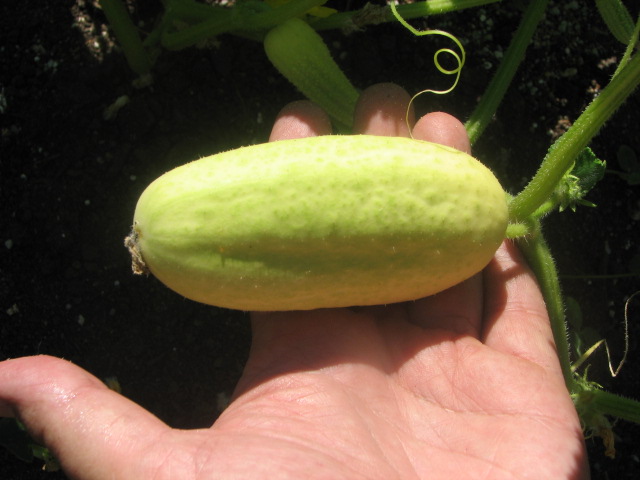
The original Boothby's Blonde available from Fedco Seeds, Waterville, Maine. We found that Boothby's vines lasted most of the summer but the Cornell cross produced nicer looking fruit and was more productive.
You see, this was a cross of a New England heirloom favorite, Boothby's Blonde, a handi-sized white snacking cucumber acclaimed for it's mild flavor and crunchy texture. Those that like white cucumbers for novelty and flavor appreciate the Blonde. What would be nicer though might be more productivity and disease resistance.
With the input of other participants in the Organic Seed Partnership, Cornell breeders crossed Boothby's Blonde to Marketmore 97, a long green cucumber and the newest cucumber in the Marketmore line. Marketmore is highly praised for flavor and disease resistance.
I received the packet marked with the breeder's working number NY04-722-N (Marketmore 97FF x Boothby's Blonde) F2. I suspect that the F1 hybrid resulting from the original cross probably produced only green cucumbers since green color is dominant in cukes. The F2 seed I received resulted from the crossing of two of those hybrids. So, out of this second generation seed, I should see a percentage of plants producing white cucumbers. My job since I volunteered, was to select a perfect Boothby's Blonde. A disease resistant plant that keeps on turning out little creamy white cucumbers all season long.
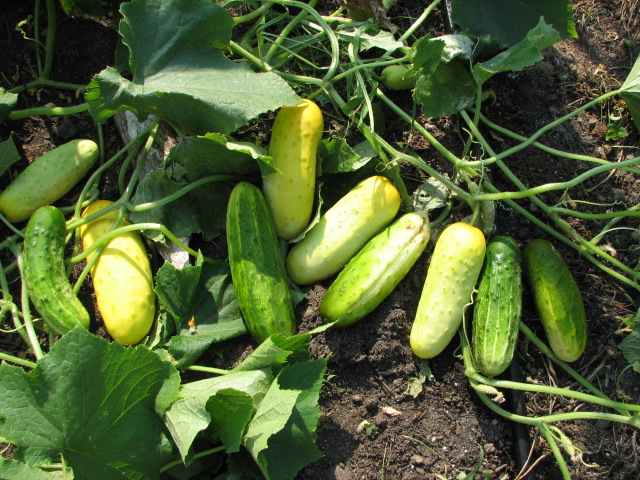
The photo above shows a selection of the fruit produced by the F2 generation (whites and greens). Actually, germination was very possibly because of waterlogging in the early season just after planting. Out of seven surviving plants, only one produced white fruit.
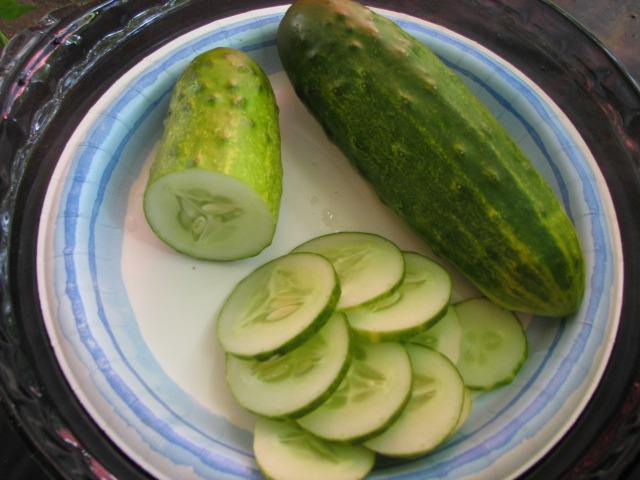
(Not Boothby's Blonde but the predominant fruit (greenish) from the F2 generation of Boothby x Marketmore 97.)
The siblings of the F2 Boothby's Blonde Cross produce loads of mostly striped yellowish-green kirby-sized and shaped fruits. Since we're only selecting for "whites", we pick off the male blossoms and nip back the vines of these so they do not cross with the white. We'll let the bees do the crossing of the white. The fruit that result from developing females on the non-white sibs will make great salads and oh yes, we'll let some mature for seed because they do have great genes from the outstanding Marketmore 97 and that wonderful little heirloom from Maine.
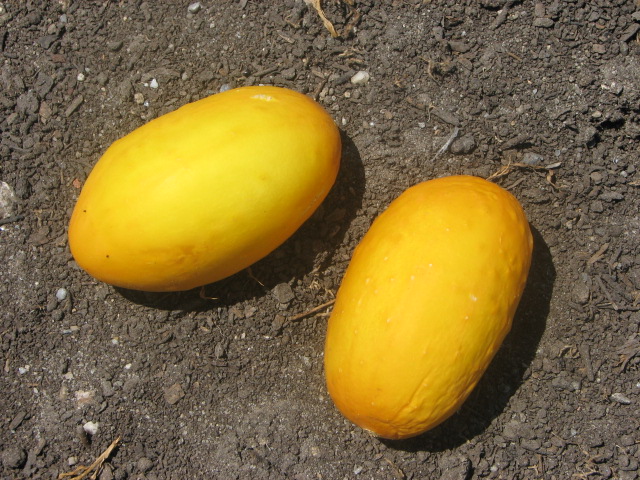
Miniature White ready for seed harvest. Cucumbers will turn orange, tan or dull white when ripe (over-ripe for consumption). Viable seeds come from over-ripe fruit which are almost at the rotting stage.
"Miniature White" is smaller than "Boothby Blonde", only 2-3 inches when at the eating stage. It's marketed by the Seed Saver's Exchange, Decorah, Iowa. It rapidly swells with seeds though and turns orange when it's mature for the seed saver only a few days later.
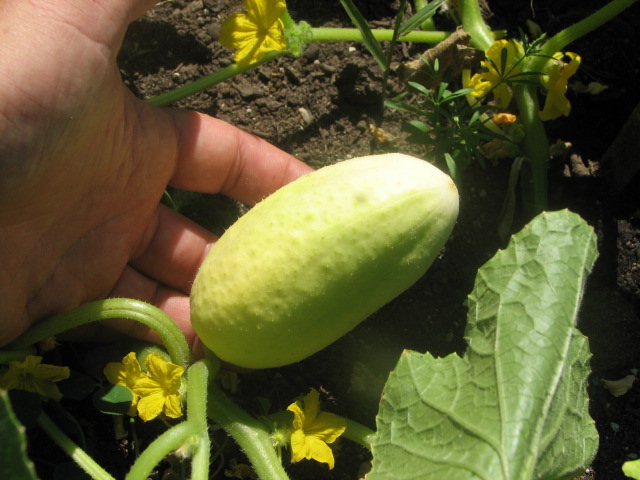
A new Boothby's Blonde?
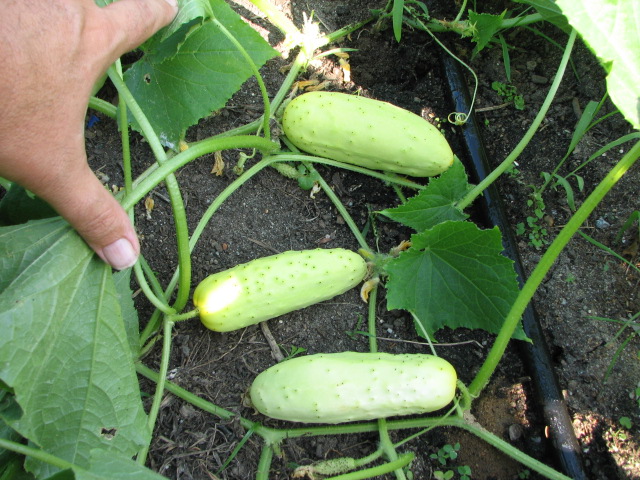
A Disease Resistant Boothby's? It's too soon to tell. So far, the vines are healthy and the yield is much better than the original Boothby's Blonde that we are growing for comparison. It's always nice to be able to compare what you hope is an improvement to the original. You can see that the fruit is a bit more streamlined than the original. It has a nice length to width ratio that picklers look for. It also has a pleasant fresh eating quality. It's black spined like the original.
White Stallion
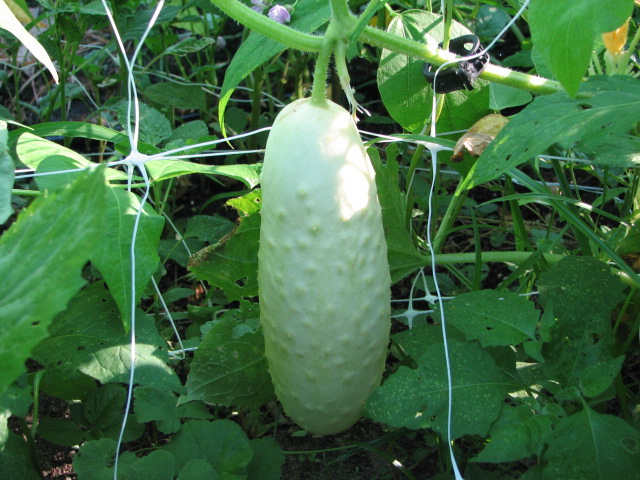
White cucumbers are probably better known in Europe and Asia where they are used in cooking and pickling. We're just beginning to see some of Asian varieties appear in retail seed catalogs. This one comes from available from Dimension Trade Company, Scappoose, OR. White Stallion, one of several we are evaluating, is a real beauty. The fruit of the one above is about 9 inches in length, comparable to an American market type. It is a vigorous climber although we use cucumber clips (to right of the fruit stem above) that snap the vine to the netting so that the weight of the fruit doesn't pull the vine down. It's also a good greenhouse variety and produces large numbers of consistently marketable fruit.
Other whites cucumbers, the white spined, "Lungo di Parigi" imported from Italy by Pinetree Garden Seeds in New Gloucester, ME, a nice source of specialty seeds for home gardeners.
Other white cucumbers, "White Wonder". This one looks more like Lungo di Parigi than the selection that I grew 20 years ago which was whiter, narrower and bumpier.
|